Contact Person:Dr. Safwan Sayyal
Working Hours:Mon - Fri: 9:00 AM - 5:00 PM
Contact:info@sayyalhealth.com








Published: February 16th, 2026Last updated: October 8th, 2026
Most of us check our skin for unusual moles or spots, but how many of us think to examine our nails? The truth is, melanoma can develop in surprising places, including under and around your fingernails and toenails. While nail melanoma is rare, accounting for only 1-3% of all melanoma cases, catching it early can make all the difference in treatment outcomes.
This blog will help you to understand everything you need to know about checking your nails for melanoma, recognising warning signs, and understanding when it's time to see a doctor.
Melanoma is a serious type of skin cancer that develops in the cells that produce pigment. When melanoma appears in the nail area, it's called melanoma fingernail or melanoma subungual ("subungual" simply means "under the nail").
Melanoma cancer in nails typically starts in the nail bed (the skin beneath your nail) or the nail matrix (where your nail grows from). From there, it can appear as a dark streak or discolouration that shows through the nail itself.
Unlike other forms of melanoma that are often linked to sun exposure, melanoma of the nails can develop in areas that rarely see sunlight. That's why it's often overlooked until it reaches more advanced stages.
Subungual melanoma
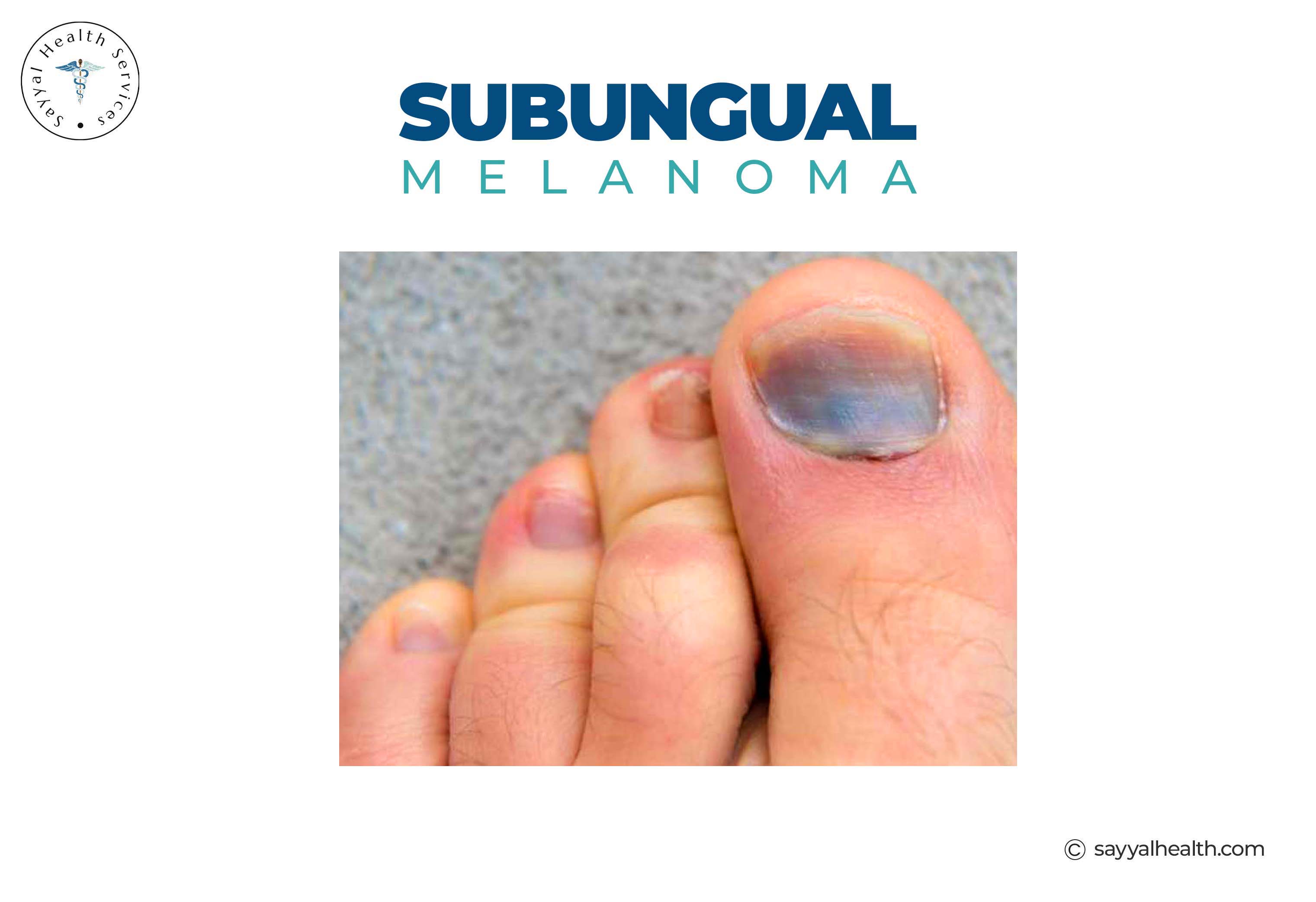
Nail Melanoma

Early detection saves lives. When melanoma in fingernails or toenails is caught early, treatment is usually more effective and less invasive. The problem? Many people dismiss changes in their nails as bruises, fungal infections, or simple discolouration.
By learning what to look for and making nail checks part of your routine, you're taking an important step in protecting your health.
Checking your nails for signs of melanoma doesn't require special equipment, just good lighting and a few minutes of your time. Here's how to do it properly:
Natural daylight is good. But you can do your nails in a bright lamp too. Make sure you can see your nails clearly without shadows.
Look at the top surface of each fingernail. Check for:
Don't forget to look at the skin around your nails (the cuticle area) for any unusual spots or growths.
Melanoma of the toenail is more common than melanoma of the fingernail, particularly on the big toe. Remove nail polish if you wear it; you need to see the natural nail underneath.
Examine each toenail the same way you did your fingernails. Pay special attention to your big toes, as melanoma of the toenail occurs most frequently there.
This step is easy to skip but important. Gently lift your nail tips and look at the skin underneath. Check for dark spots or unusual growth.
Nail cancer melanoma typically affects just one nail. If you notice a change in one fingernail or toenail that doesn't appear on the others, take note.
Recognising melanoma nail early means knowing what nail melanoma signs to watch for melanoma on the fingernail. Here are the most common melanoma nail symptoms:
The hallmark sign of melanoma in the toenail or fingernail is a vertical dark band running along the nail. This streak:
This is different from a simple bruise, which typically starts at the tip of the nail and grows out as the nail grows.
The dark streak in nail

If you notice pigmentation spreading from the nail onto the surrounding skin (especially the cuticle), this is called Hutchinson sign nail. It's a significant warning sign of melanoma of toenail and requires immediate medical attention.
Hutchinson Sign Nail

Beyond discolouration, watch for:
Melanoma skin cancer under the nail typically affects only one digit. If you have discolouration in multiple nails, it's more likely to be something else, like a vitamin deficiency or medication side effect, but still worth discussing with your doctor.
When checking your nails for signs of melanoma, it’s important to watch for subtle but serious changes. Dermatologists recommend paying attention to the following warning signs:
Darkening of the surrounding skin: If the skin around your nail becomes darker or pigmented, it may indicate a more advanced stage of Melanoma.
Nail lifting: When the nail starts to lift away from the nail bed, the white tip may appear longer than usual. This can signal an underlying issue.
Vertical nail splitting: A crack or split running down the middle of the nail especially if persistent, should not be ignored.
Bump under the nail: A lump, bump, or nodule beneath the nail may develop, sometimes accompanied by a visible band of color.
Abnormal nail discoloration: Look for dark streaks or bands that are irregular in shape, uneven in width, or changing over time.
While the basic signs are similar, there are some differences worth noting:
Whether it's melanoma on the toenail or fingernail melanoma, the key is not to ignore changes.

Fungal infection, subungual hematoma, and melanoma comparison on fingernails

Not every dark streak or nail change is melanoma, but certain signs ask you to visit a doctor.
See a doctor if you notice:
How do I know if my nail spot is melanoma? Honestly, you can't diagnose it yourself, and that's okay. That's what dermatologists are for. If something looks suspicious or you're worried, getting it checked is always the right choice.
Your dermatologist can examine suspicious nails using a dermatoscope, a special magnifying tool that helps visualise patterns in the nail. If melanoma of the nails is suspected, they may recommend a biopsy, removing a small sample of tissue for laboratory analysis.
Some people search online to compare their nails to images. While this can be educational, photographs alone can't diagnose melanoma, cancer, or fingernail or toenail conditions. Many benign conditions can look similar to melanoma, and some melanomas look deceptively harmless.
Stage 1 Melanoma Toenail Images
Toenail Melanoma and Fungus

Melanoma Under the Toenail

Anyone can develop melanoma, cancer, or nail conditions, but certain factors increase risk:
Interestingly, unlike other melanomas, sun exposure doesn't appear to be a major risk factor for melanoma in a toenail or fingernails.
If you've scheduled an appointment because you're concerned about nail melanoma symptoms, here's what typically happens:
A nail biopsy might sound scary, but it's usually a straightforward procedure done with local anaesthesia. The good news? Most nail biopsies come back showing non-cancerous conditions.
At Sayyal Health, we make it simple, supportive, and stress-free to get the medical attention you deserve. Whether you need a general check-up, skin cancer checkup, chronic condition management, or personalised medical advice, our team is here to listen and provide thorough, compassionate care.
We focus on clear communication, careful assessment, and treatment plans tailored to you and your family. If you’ve been putting off a visit or have concerns you’d like professionally assessed, now is the right time.
Book Appointment with Dr. Safwan today and take a confident step toward better health and peace of mind.
Making nail examination a regular habit, say, once a month, can help you catch changes early. Think of it as part of your overall health routine, just like checking your skin or doing breast self-exams.
Remember these key points:
What does stage 1 nail melanoma look like?
Stage 1 nail melanoma often appears as a dark brown or black vertical stripe under the nail that may gradually widen. The surrounding skin may also darken over time.
What is 90% of melanoma cancer caused by?
About 90% of melanoma cases are caused by exposure to ultraviolet (UV) radiation from the sun or tanning beds.
What is the 2 week rule for melanoma?
The 2-week rule suggests seeing a doctor if a new or changing mole or skin spot does not heal or improve within two weeks.
What are the five warning signs of melanoma?
The five warning signs follow the ABCDE rule: Asymmetry, Border irregularity, Color variation, Diameter larger than 6 mm, and Evolving or changing appearance of a mole.
How to check for melanoma and nails if feels like cancer?
Check for melanoma using the ABCDE rule: Asymmetry, Border irregularity, Color changes, Diameter (>6mm), and Evolving shape or size.
For nails, watch for dark streaks, nail discoloration, bleeding, or changes in shape.
Your nails can tell you a lot about your health. If you've noticed any suspicious changes, a new dark streak, spreading pigmentation, or anything that just doesn't look right, don't wait. Schedule an appointment with a dermatologist.
Even if it’s fine, you’ll feel better. And if it is melanoma nail cancer, catching it early gives you the best chance for successful treatment.
Your health is worth a closer look. Take a few minutes today to check your nails, and make it a monthly habit. It's a small step that could make a big difference.
Remember: This article is for educational purposes and doesn't replace professional medical advice. Always consult with a healthcare provider about any concerns regarding your health.
Your feedback helps us create better content for everyone.