Contact Person:Dr. Safwan Sayyal
Working Hours:Mon - Fri: 9:00 AM - 5:00 PM
Contact:info@sayyalhealth.com








Published: April 17th, 2026Last updated: September 23rd, 2026
Acral lentiginous melanoma (ALM) is the most common subtype of skin cancer that develops in the acral regions of the body, meaning the extremities.
The word "lentiginous" refers to a freckle-like, flat growth pattern that spreads along the surface of the skin before growing deeper. This makes early detection possible if you know what to look for.
These include:
Unlike most melanomas, acral lentiginous melanoma does not appear to be caused by sun exposure. This means anyone can develop it, regardless of skin tone or how much time they spend outdoors. In fact, it is the most common type of melanoma in people with darker skin tones, including people of African, Asian, and Hispanic descent.
When people think about skin cancer, they usually picture a mole on the back or face. But one of the most dangerous forms of melanoma can hide in plain sight on the palms of your hands, the soles of your feet, or under your toenails and fingernails.
Acral Lentiginous Melanoma Images
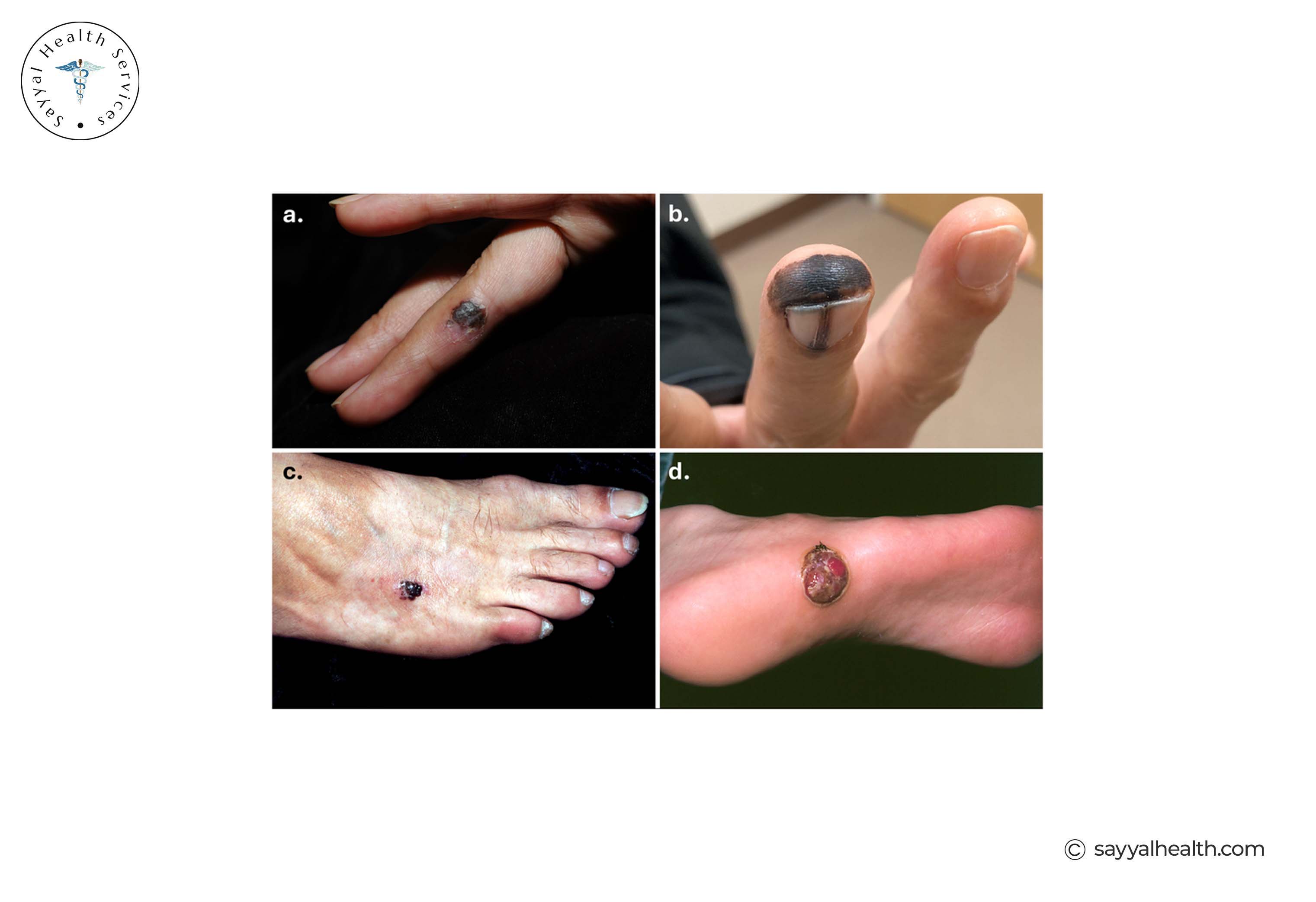
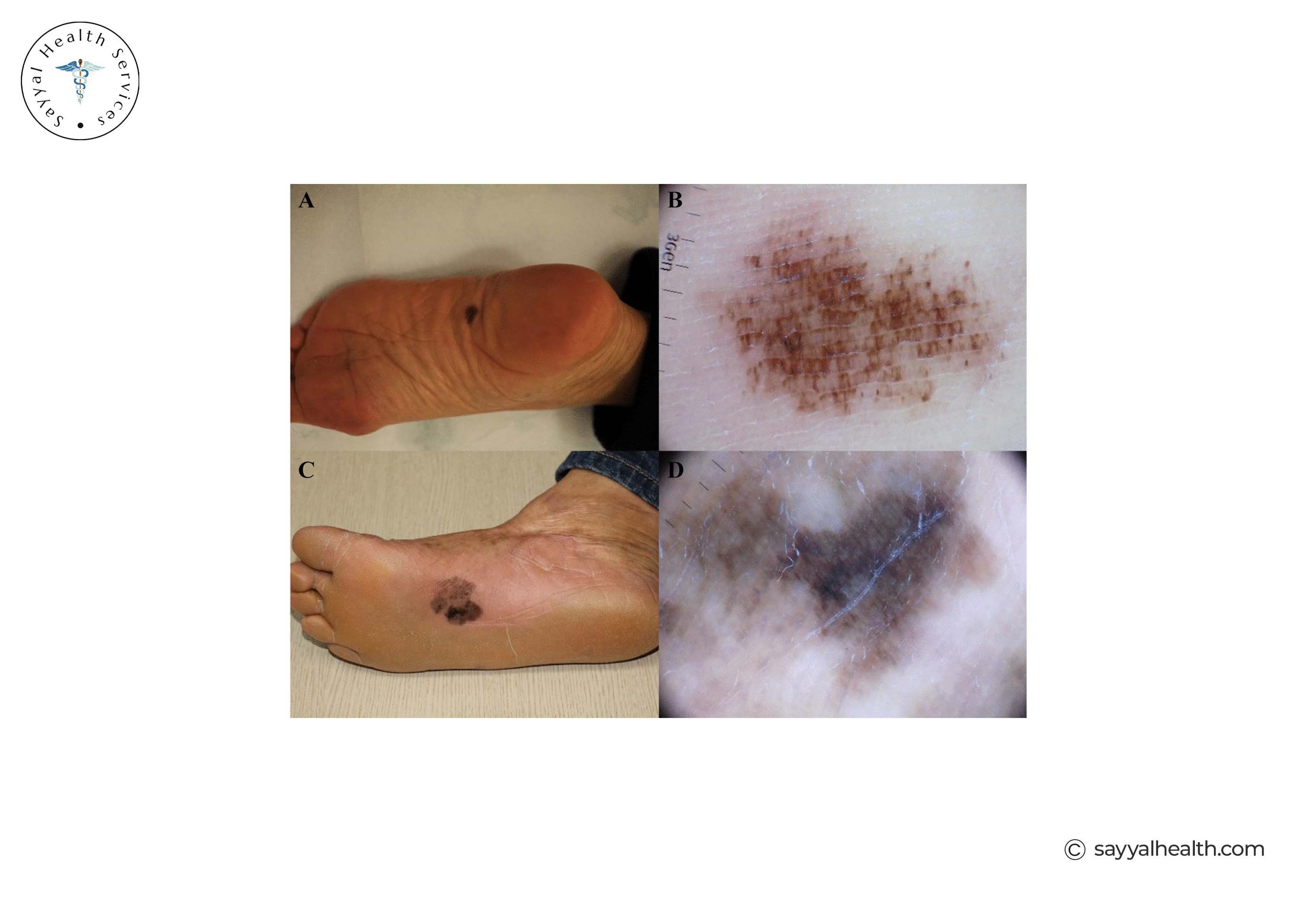
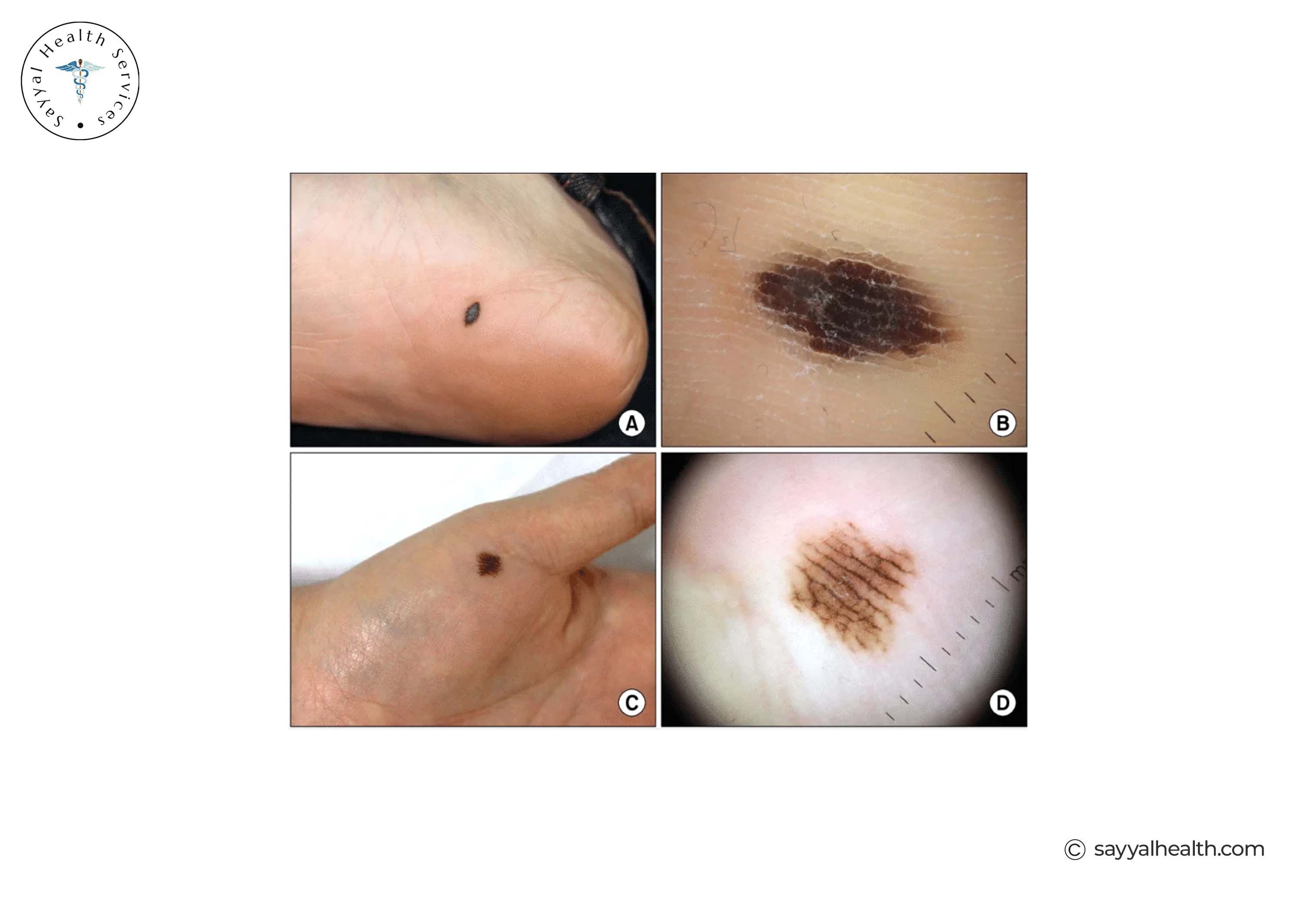
Acral melanoma, and its most common form, Acral lentiginous melanoma cancer, is a type of skin cancer that affects areas not typically exposed to the sun. A rare but aggressive form of skin cancer that develops on the palms, soles or under nails. Because it grows in unusual locations. It is often missed or mistaken for a bruise, a fungal infection, or simply a dark patch of skin. By the time it is diagnosed, it can already be at an advanced stage.
At Sayyal Health, we believe that informed patients catch cancer early. This blog is about acral melanoma early warning signs and visual clues to diagnosis, treatment, and survival rates.
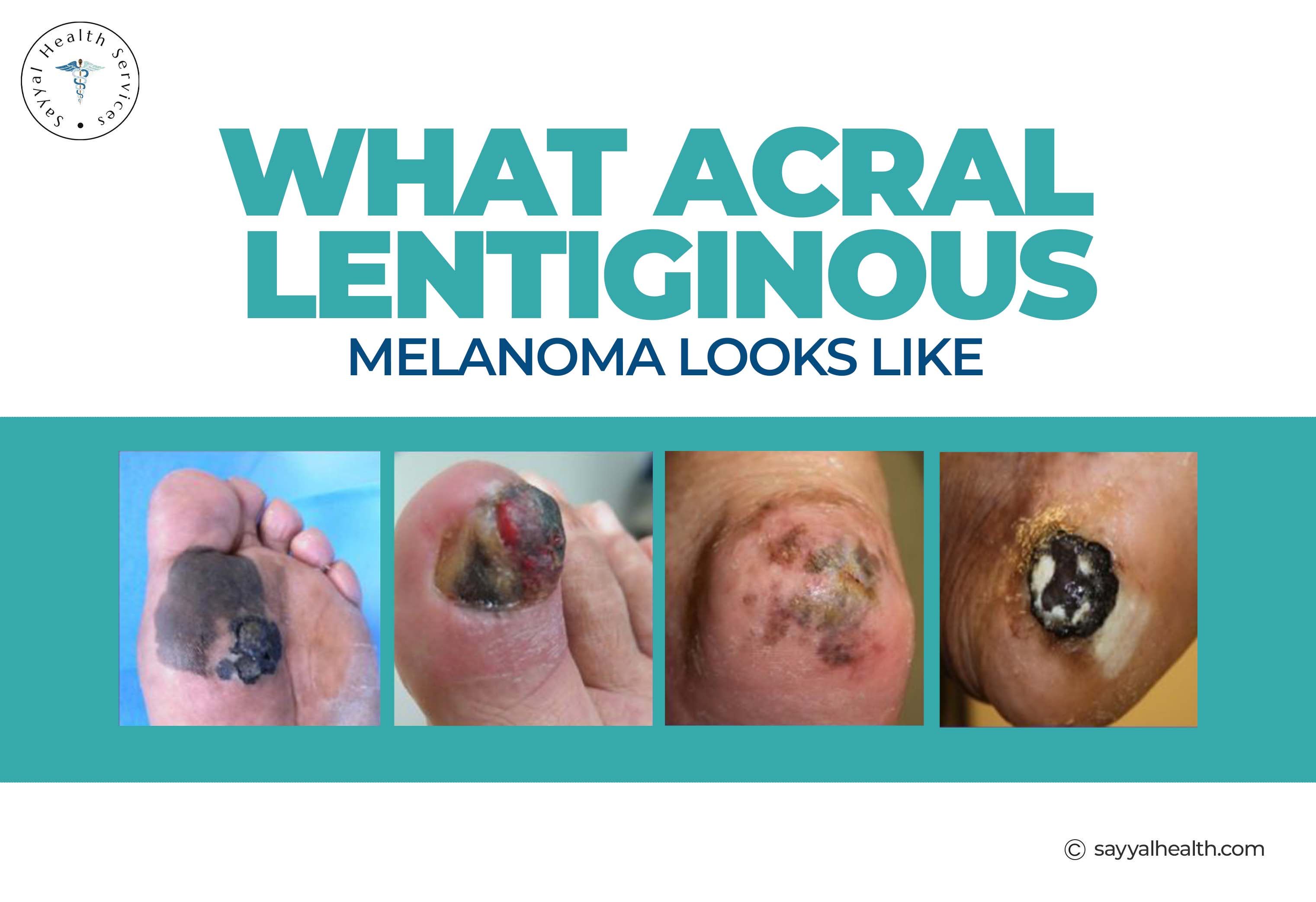
The exact cause of acral melanoma is not fully understood. Because UV radiation does not appear to be the main driver, researchers believe other factors play a role.
Important: Having none of these risk factors does not mean you are immune. Acral melanoma can affect anyone, which is why self-examination is so important.
One of the biggest challenges with acral lentiginous melanoma is that early signs can look completely harmless. People often dismiss them as a bruise, a stain, or a new freckle on the palm of their hand.
Here is what to watch for in each area:
Melanoma on the palm of the hand often appears as a flat, irregularly shaped patch of brown, black, or nail discoloration. Unlike a normal freckle on the palm of your hand, a melanoma lesion tends to:
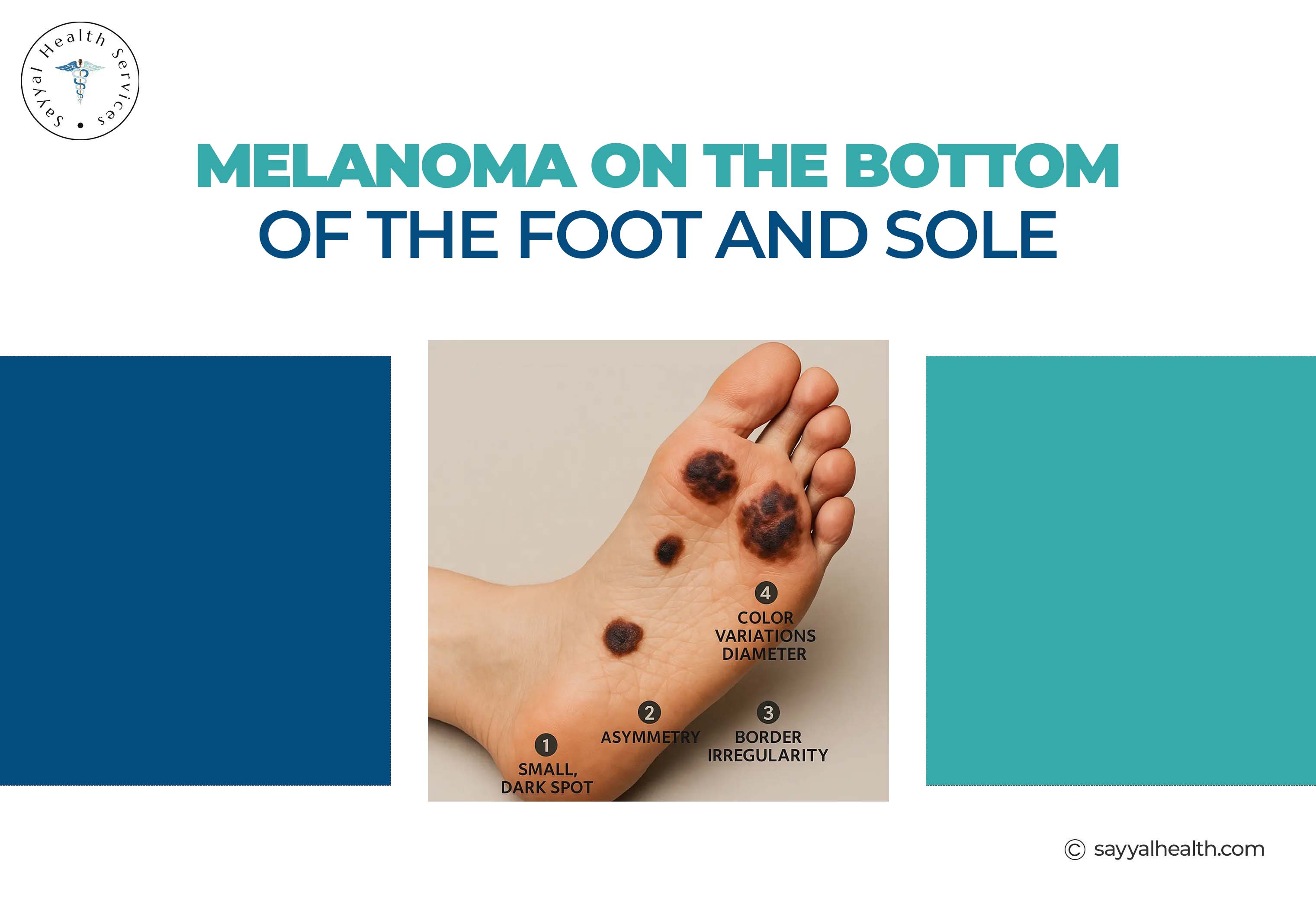
Foot melanoma on the bottom of the foot or sole is particularly easy to overlook because most people do not routinely examine the undersides of their feet. Warning signs include:
Melanoma on the Bottom of Foot and Sole Image
Nail melanoma, sometimes called 'melanoma cancer toenail', presents differently from skin lesions. It typically appears as the following:
It is important to note that dark nail stripes are common, and most are benign. However, any stripe that is widening, affecting multiple nails, or appearing for the first time in an adult should be evaluated by a doctor.
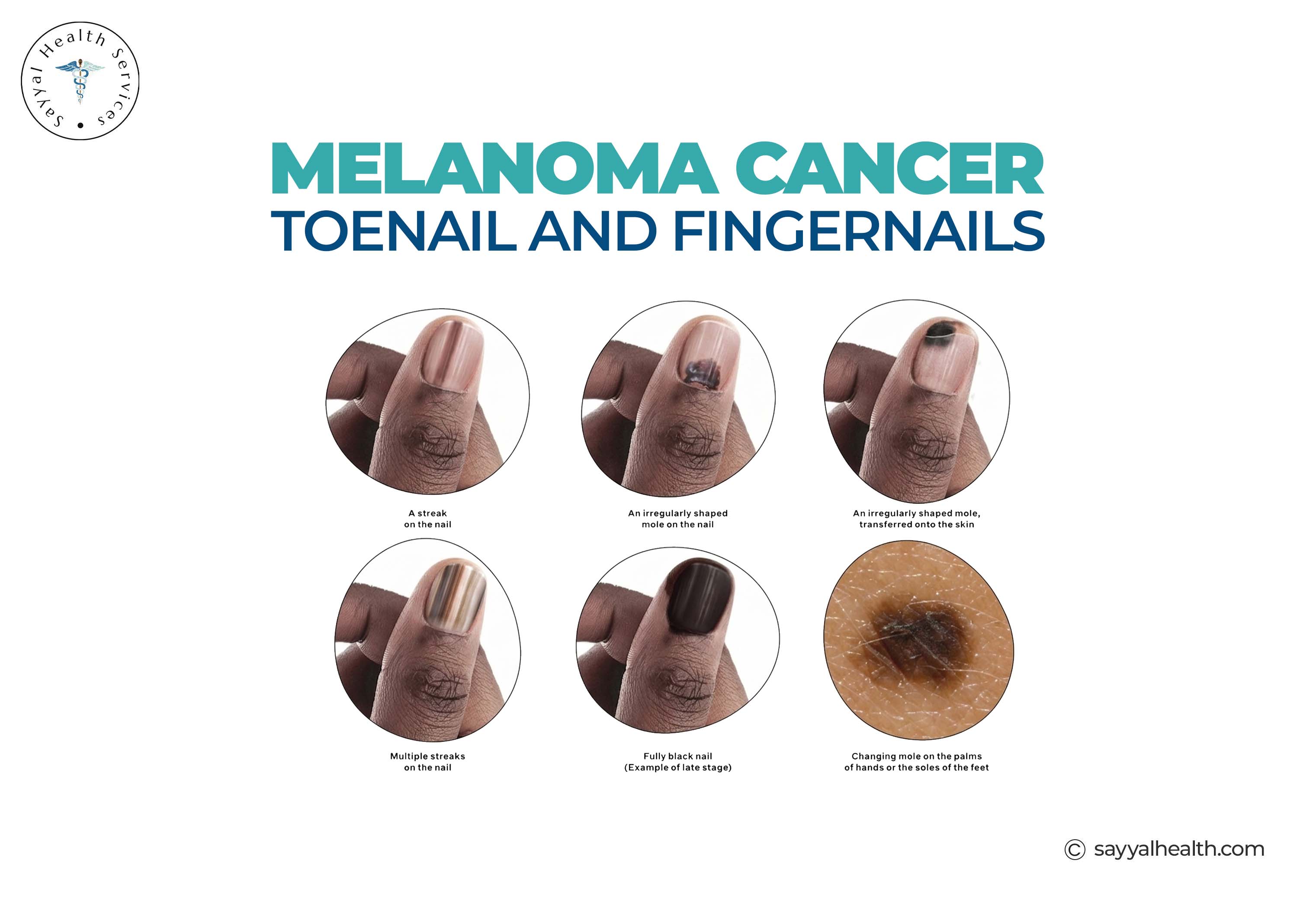
Acral lentiginous melanoma on a toe or acral lentiginous melanoma on a finger often first appears around the nail or on the skin of the digit. Moles in the palm or on the fingers that are irregular or changing should not be ignored.
When a dermatologist examines a suspicious lesion on the hands or feet, they often use a tool called a 'dermatoscope', a magnifying device that illuminates the skin. This technique is called dermoscopy.
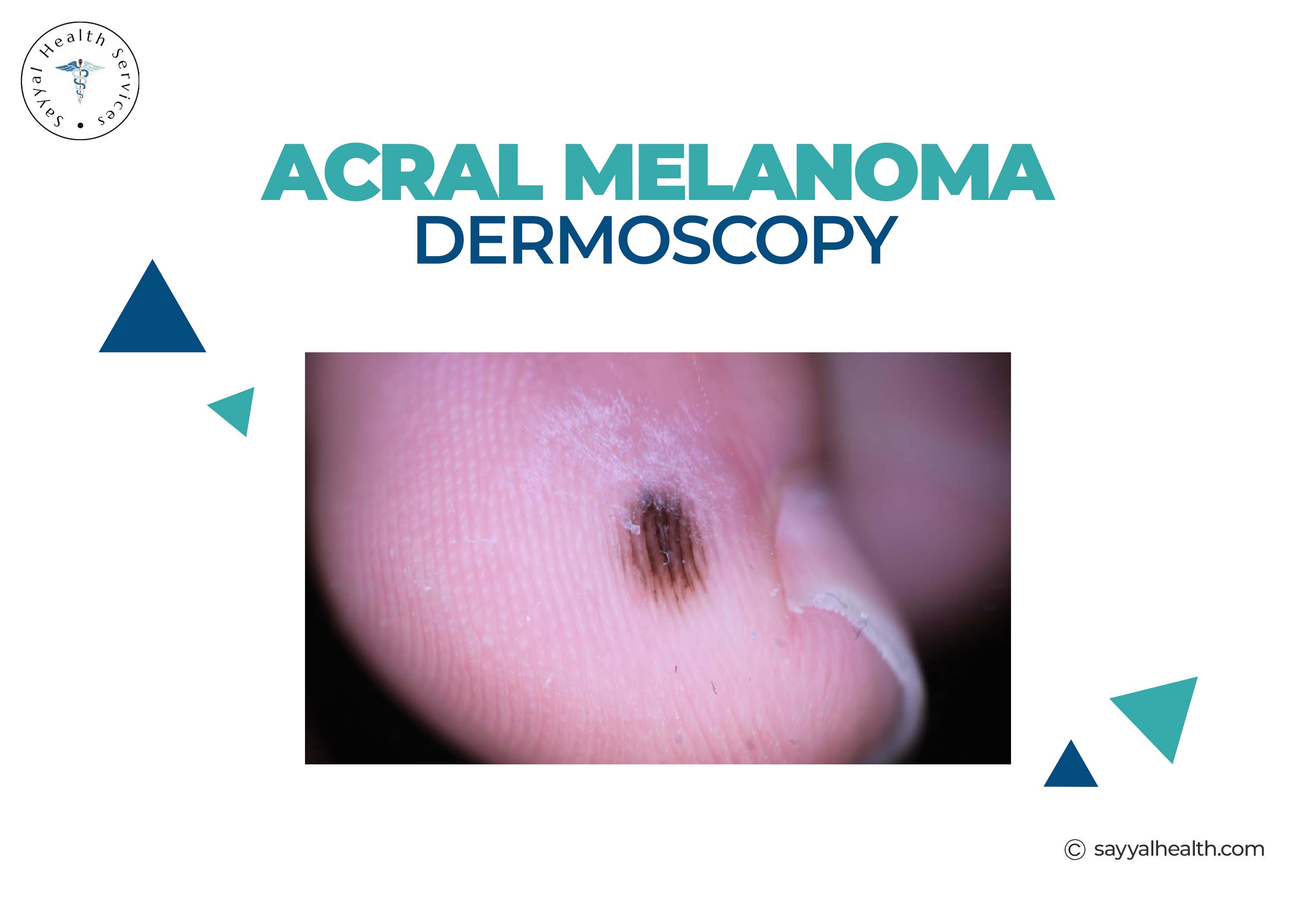
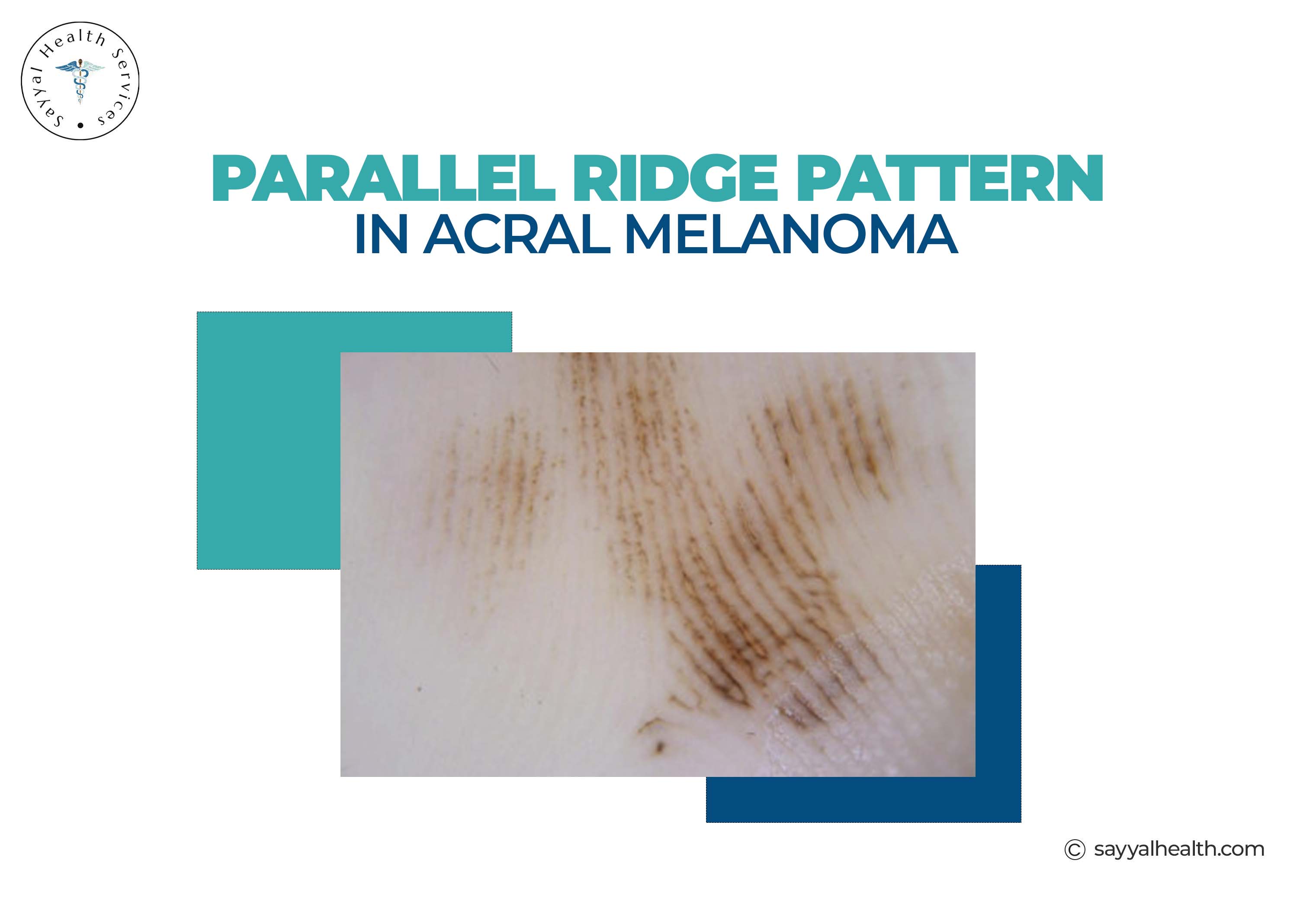
Dermoscopy acral lentiginous melanoma assessment looks for specific patterns under magnification. The most important finding is the parallel ridge pattern, one of the most reliable early signs of melanoma on acral skin. The pigmentation (dark colour) follows the ridges of the skin's fingerprint lines. In benign (non-cancerous) lesions, colour tends to follow the grooves, not the ridges.
Acral Melanoma Dermoscopy
Parallel ridge pattern Melanoma
Other dermoscopy acral melanoma warning signs include:
Note: If you are ever shown an image of a lesion and the dark colour follows the ridges (the raised lines) of the sole or palm, this is a significant warning sign that requires urgent medical review.
An acral nevus is a benign (harmless) mole that appears on the palms or soles. Because these locations are unusual for moles, people often worry unnecessarily, but they can also miss genuine warning signs.
|
Feature |
Acral Nevus (Benign) |
Acral Melanoma (Malignant) |
|
Colour |
Uniform brown or tan |
Multiple shades; uneven |
|
Border |
Well-defined, smooth |
Irregular, blurry edges |
|
Size |
Usually small and stable |
May increase in size over time |
|
Dermoscopy Pattern |
Parallel furrows (grooves) |
Parallel ridge (raised lines) |
|
Change over time |
Stable |
Growing, changing, or spreading |
|
Symptoms |
None |
May itch, bleed, or crust |
If you are unsure whether a mark on your foot or hand is an acral nevus or something more serious, always seek professional evaluation. The table above is a guide, not a diagnosis.
The answer depends on what stage the melanoma is at when first noticed.
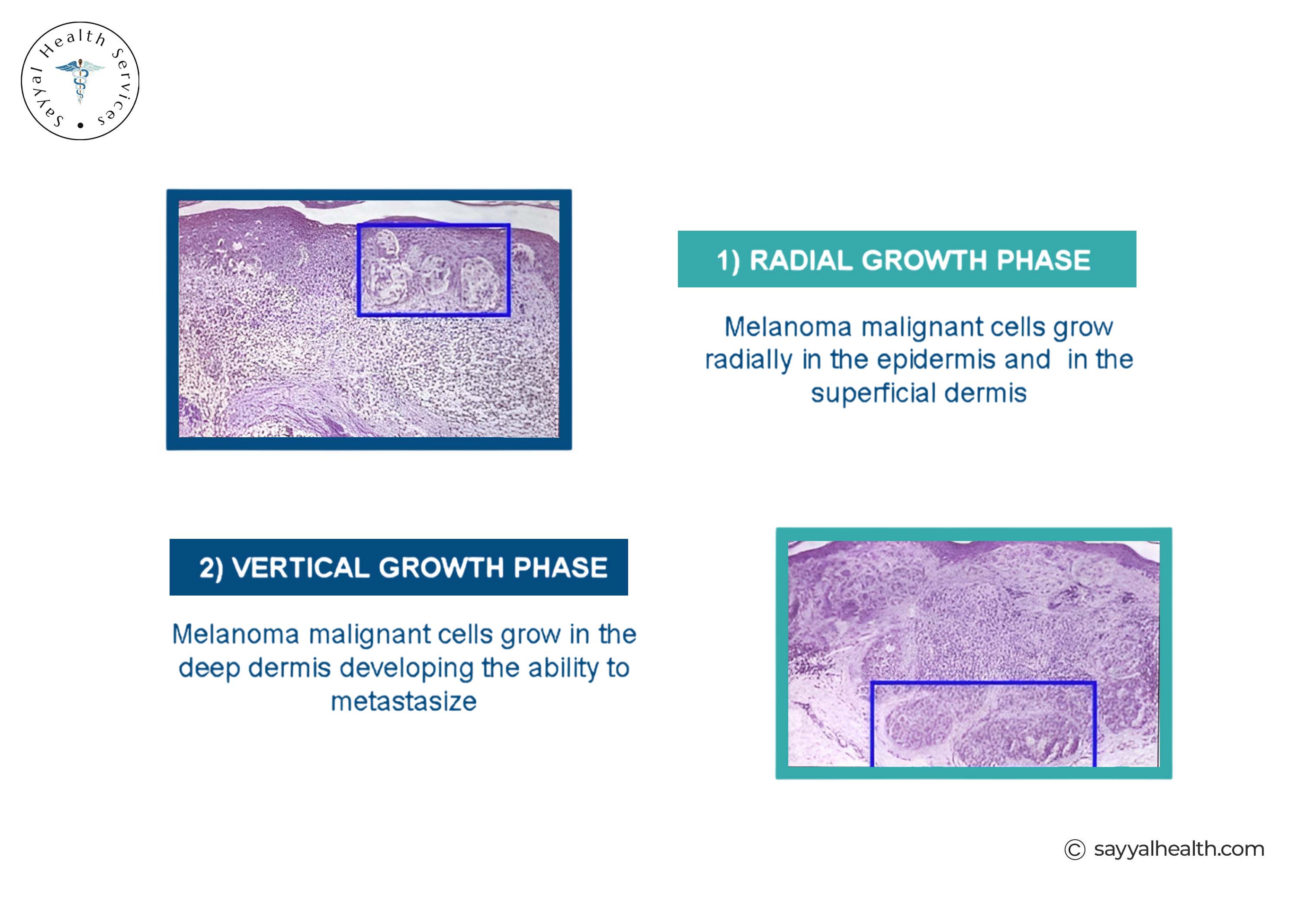
Acral lentiginous melanoma typically grows in two phases:
In its early stages, acral lentiginous melanoma grows outward across the surface of the skin rather than downward into deeper layers. This phase can last months to years. During this time, the lesion may look like an ordinary brown patch or stain, and this is the phase where treatment is most effective.
If left untreated, the cancer begins to grow downward into the deeper layers of skin and tissue. Once this happens, it becomes harder to treat and more likely to spread to lymph nodes and other organs.
There is no single answer. Some lesions remain in the radial phase for years, while others progress more quickly. This unpredictability is exactly why early detection matters so much.
Stage 1 acral lentiginous melanoma has an excellent outlook when treated promptly. The goal of awareness is to catch it at this stage before it progresses.
A doctor will follow a structured process if he suspects acral melanoma.
Your doctor will examine the lesion closely, looking at its size, colour, shape, and borders. They may ask how long you have had it and whether it has changed.
A dermatoscope is used to look at the lesion under magnification. As described above, dermoscopy for acral melanoma specifically looks for the parallel ridge pattern and other warning signs.
Biopsy is the only way to confirm melanoma. This process includes removing a small sample of tissue and examining it under a microscope. This is a straightforward procedure to be performed under local anaesthetic.
Further tests such as an ultrasound, CT scan, or PET scan may be used to determine if melanoma is confirmed to see whether the cancer has spread.
The treatment for acral lentiginous melanoma depends on the stage at diagnosis and how far the melanoma cancer has spread.
For most cases, surgery is the first and most effective treatment. The surgeon removes the melanoma along with a margin of healthy tissue around it (called a wide local excision). For nail melanoma, this may involve removing part or all of the nail and surrounding tissue.
If the melanoma is at an intermediate stage, the surgeon may also check the nearest lymph nodes to see if cancer has spread. This procedure helps stage the disease accurately.
For advanced acral melanoma, immunotherapy drugs, which help your immune system recognise and attack cancer cells, have transformed outcomes. Drugs such as pembrolizumab and nivolumab are commonly used.
If the melanoma has specific genetic mutations (such as a BRAF mutation), targeted therapy drugs can be used to block the growth of cancer cells.
Radiation is not the first choice for acral melanoma. But it may be used after surgery in some cases or to treat areas where cancer has spread.
Given that acral lentiginous melanoma behaves differently from UV-related melanoma. There is ongoing research into new treatment approaches. Your specialist can advise you on whether a clinical trial might be appropriate.
One of the most important factors affecting survival is the stage at which the cancer is diagnosed. Here is a general overview:
It is worth noting that acral lentiginous melanoma has historically had a lower survival rate than other melanoma types. This is largely because it tends to be diagnosed later, not because it is inherently more aggressive. That’s why early awareness and action are important.
Survival rates are population-level statistics and do not predict individual outcomes. Speak to your specialist for a personalised prognosis based on your specific situation.
You should seek medical advice immediately whenever you notice any of the following:
Remember: If you have any doubt, get it checked. A harmless mole review is far better than a delayed cancer diagnosis. You know your body best; trust your instincts.
While acral melanoma cannot always be prevented, regular self-examination dramatically increases the chance of catching it early.
Acral melanoma and acral lentiginous melanoma are rare but serious cancers that are far too often caught late. However, finding it at stage 1 or early stage 2 usually allows successful treatment.
Whether you have noticed a suspicious patch on the bottom of your foot, a dark stripe under a toenail, or an unusual freckle on the palm of your hand, the most important step is not to wait. A consultation with a specialist can put your mind at rest or, if there is a problem, start you on the path to treatment before the cancer has a chance to progress.
Sayyal Health has extensive experience in identifying and managing acral melanoma. If you have a mark that concerns you, however small, we are here to help. Early consultation is always the right decision.
what are Melanocytes?
Melanocytes are specialized melanin-producing cells located in the bottom layer of the epidermis (stratum basale), as well as in the eyes, inner ear, and other tissues
How fast does Acral Melanoma grow?
Acral melanoma usually grows slowly in the early stages but can become more aggressive if not detected early. Growth rate varies by individual and stage.
What is the first stage of Acral lentiginous melanoma?
The first stage (Stage 0 or in situ) is when cancer cells are confined to the outer layer of the skin and have not spread deeper.
How quickly does Acral melanoma spread?
It can spread gradually at first, but once it reaches deeper skin layers, it may spread more quickly to lymph nodes and other parts of the body.
What is the survival rate of Acral melanoma?
Survival rates depend on early detection. When diagnosed early, the 5-year survival rate is high (around 80–90%), but it drops significantly in advanced stages.
Medical Disclaimer: This blog has been written for educational purposes only and is not a substitute for professional medical advice, diagnosis, or treatment. Always seek the guidance of a qualified healthcare provider with any questions you may have regarding a medical condition.
Your feedback helps us create better content for everyone.