Contact Person:Dr. Safwan Sayyal
Working Hours:Mon - Fri: 9:00 AM - 5:00 PM
Contact:info@sayyalhealth.com








Published: July 14th, 2026Last updated: September 23rd, 2026
If your shoulder has started aching when you reach overhead, wakes you up at night, or just feels "weaker" than it used to, you're probably wondering whether something inside the joint has actually torn.
A torn rotator cuff doesn't always announce itself with severe pain. Sometimes it is a slow, nagging ache that builds over months. Other times, it's a sudden, sharp pain after a fall or a heavy lift.
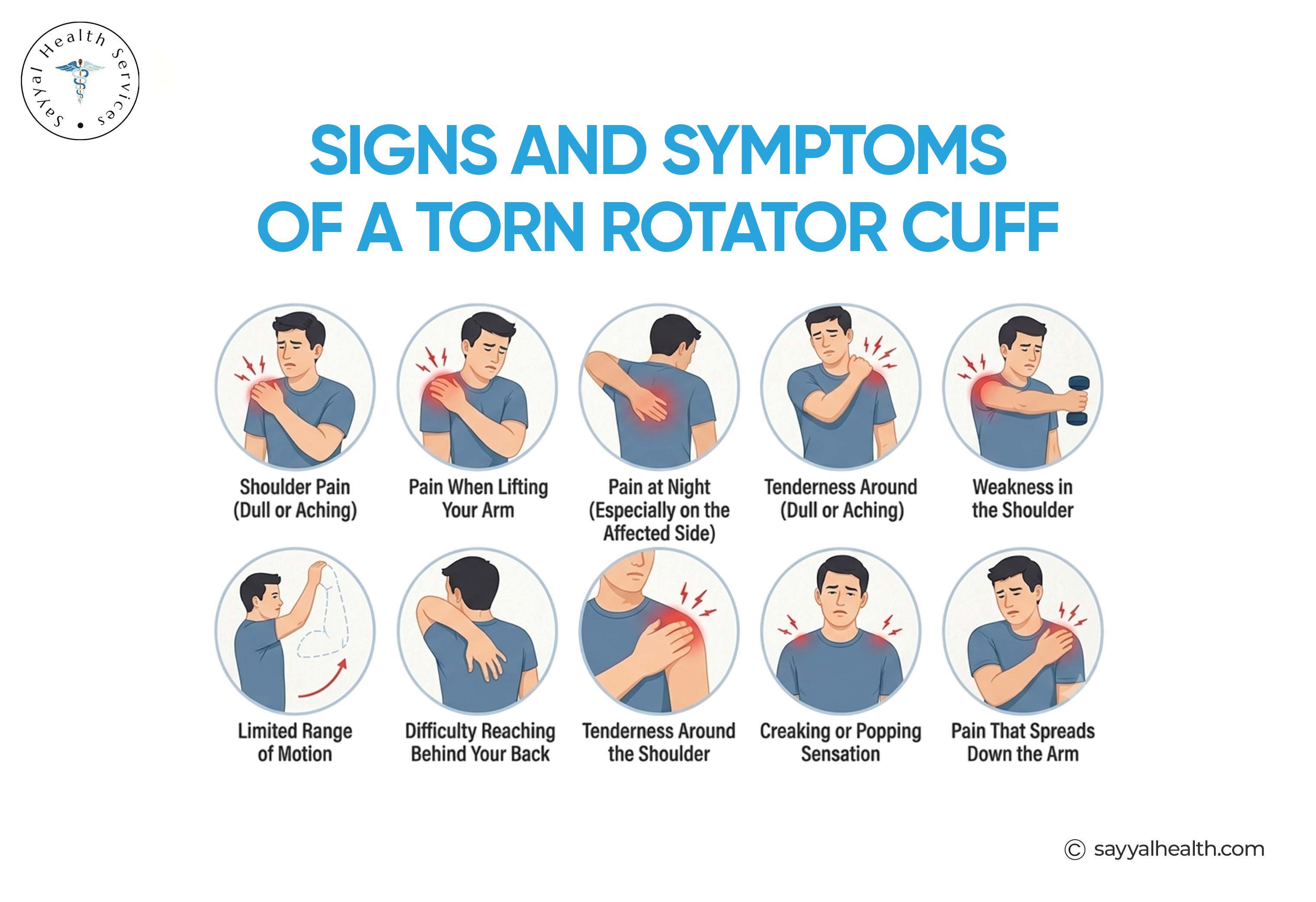
A torn rotator cuff usually causes shoulder pain (especially with overhead movement), arm weakness, night pain that disrupts sleep, and a clicking or catching sensation when moving the arm. Pain often sits on the outer or front shoulder and can radiate down the upper arm.
Symptoms may appear suddenly after an injury or develop gradually from years of wear. Because several shoulder conditions share these features, a physical exam and imaging are usually needed to confirm the diagnosis.
The rotator cuff is a group of four muscles and tendons that hold your upper arm bone in the shoulder socket and let you lift and rotate your arm. A tear happens when one or more of these tendons is partially or fully separated from the bone.
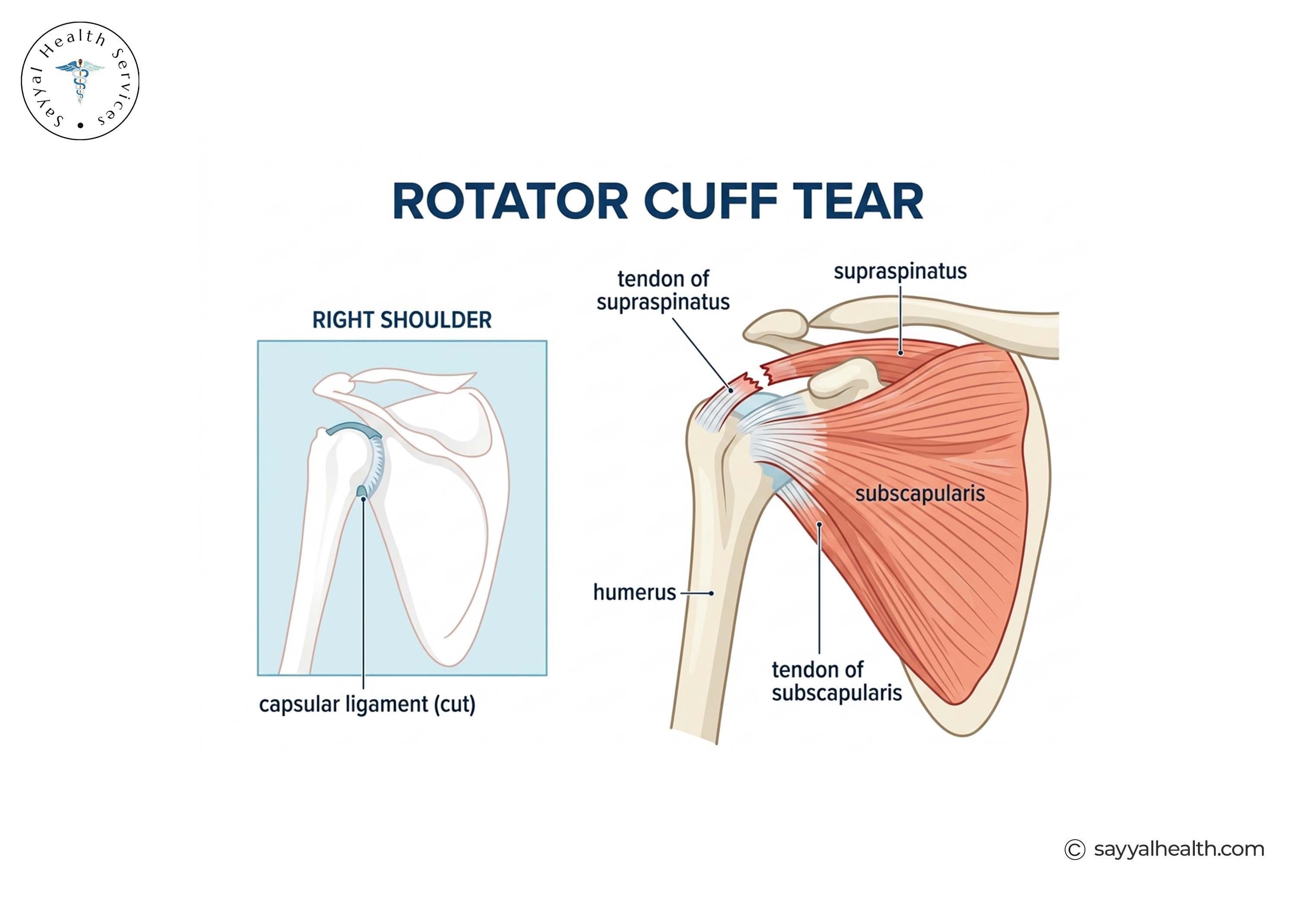
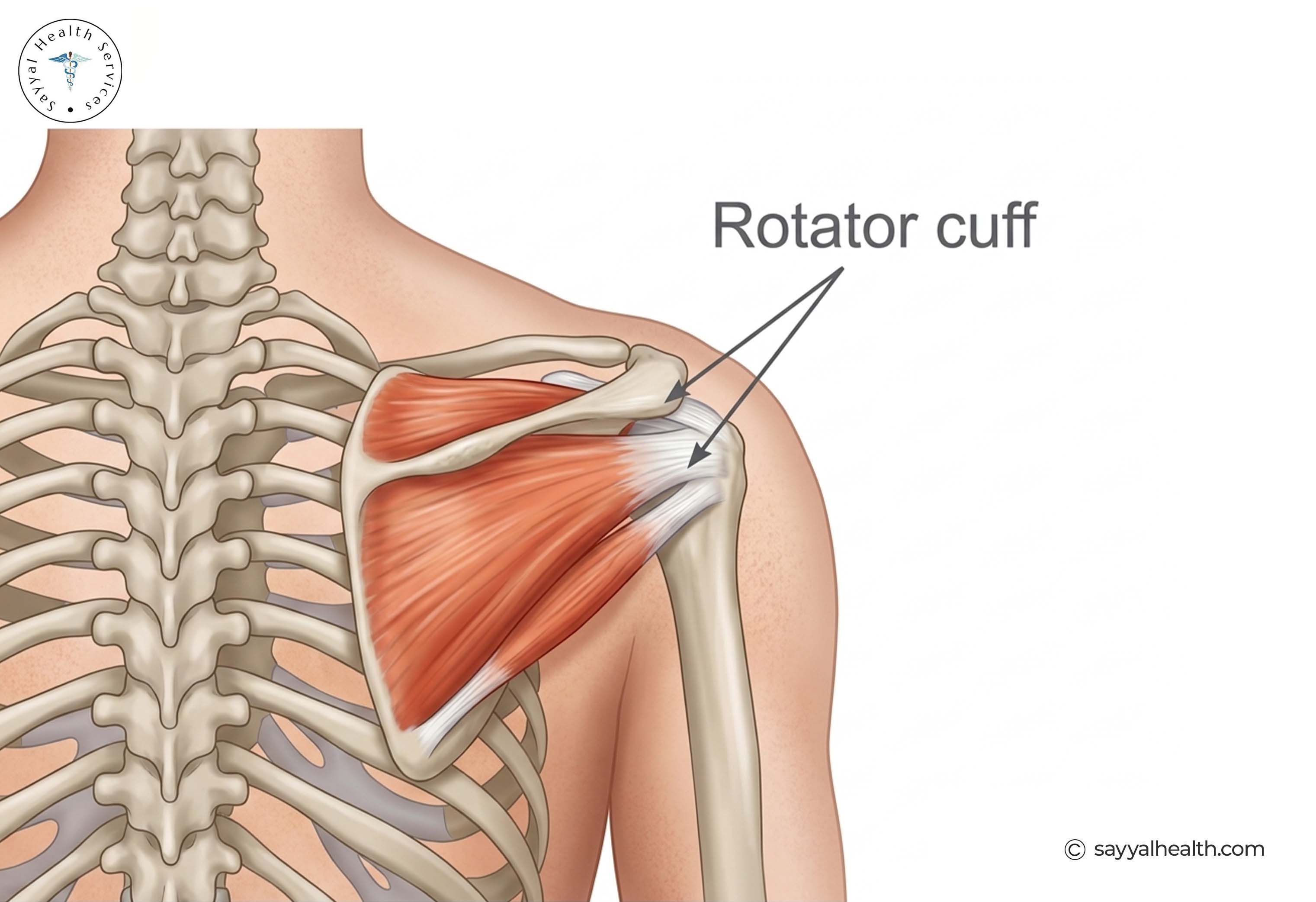
The four rotator cuff muscles are the supraspinatus, infraspinatus, teres minor, and subscapularis. They wrap around the head of the humerus (upper arm bone) like a cuff on a sleeve, which is where the name comes from. Their tendons attach to the bone and work together to stabilise the shoulder joint while your larger muscles, like the deltoid, do the heavy lifting.
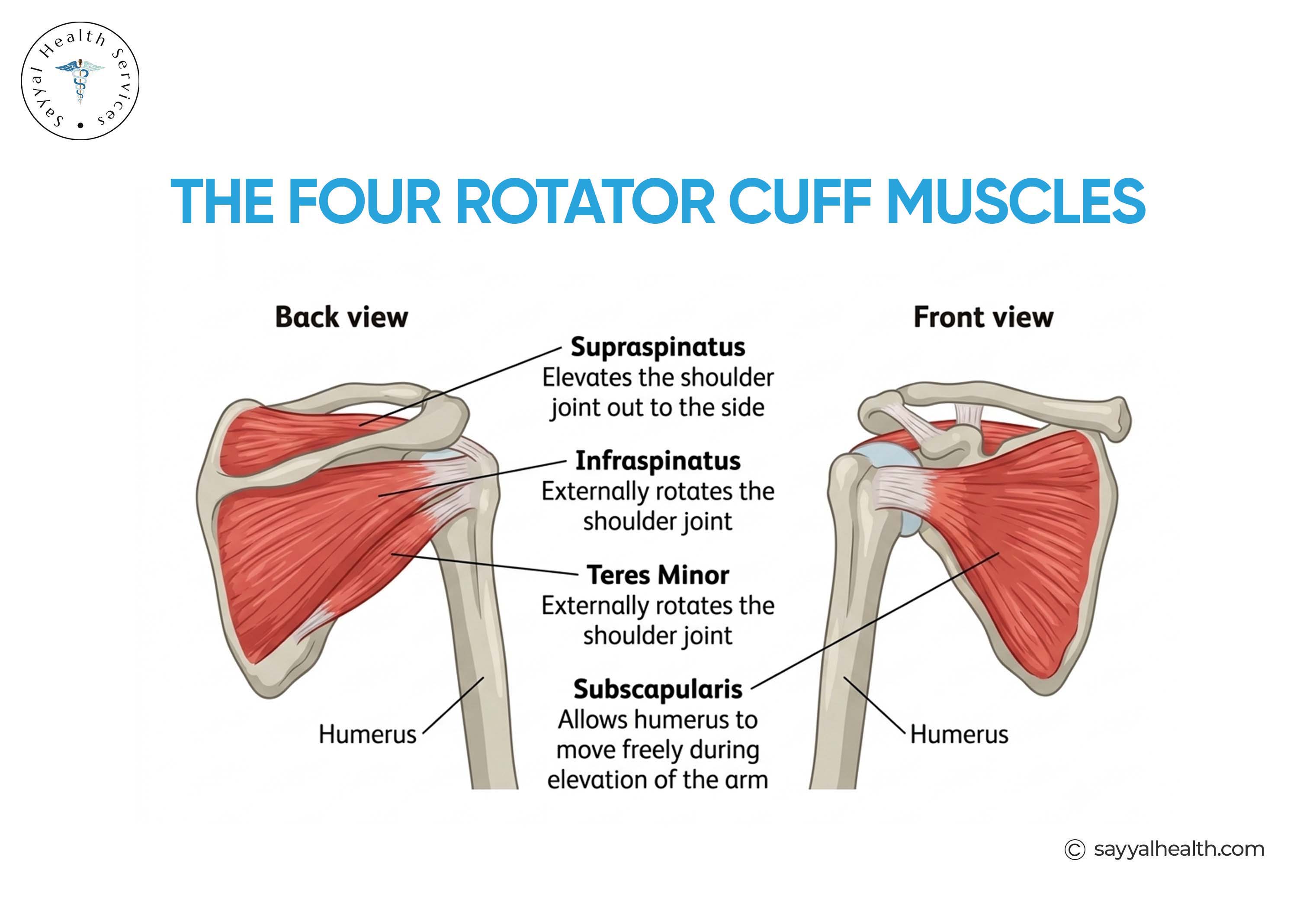
The supraspinatus tendon is the one most commonly injured. Because it passes through a narrow space under a bony arch called the acromion. Repeated friction in this tight space, combined with reduced blood supply to the tendon as people age, makes it especially vulnerable to fraying and eventually tearing.
Tears can be:
Tears also happen for different reasons. Some result from a single traumatic event, like catching yourself during a fall. Others develop gradually from repetitive overhead motion or simply from tendon tissue wearing down with age, a process sometimes called degenerative tearing.
The most common symptoms are shoulder pain with movement, weakness when lifting or rotating the arm, night pain, reduced range of motion, and a clicking or grinding sensation in the joint.
Below is a closer look at each symptom, including how it tends to show up in daily life.
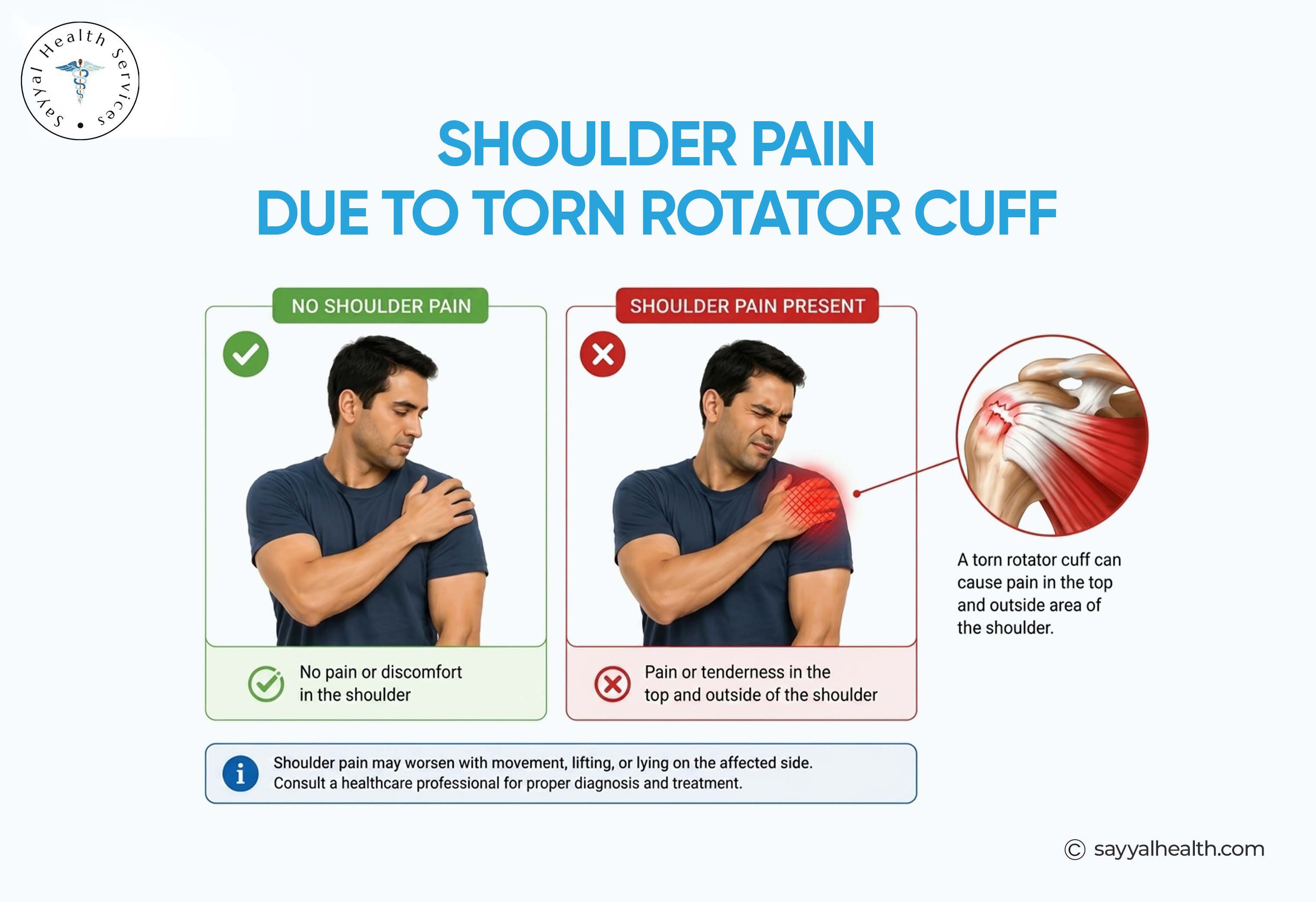
Pain in the shoulder is a symptom of a torn rotator cuff. With a rotator cuff tear, it is felt deep in the shoulder rather than on the surface, and it often worsens with specific movements rather than staying constant. Someone might feel fine sitting still but wince the moment they reach for a coffee mug on a high shelf.
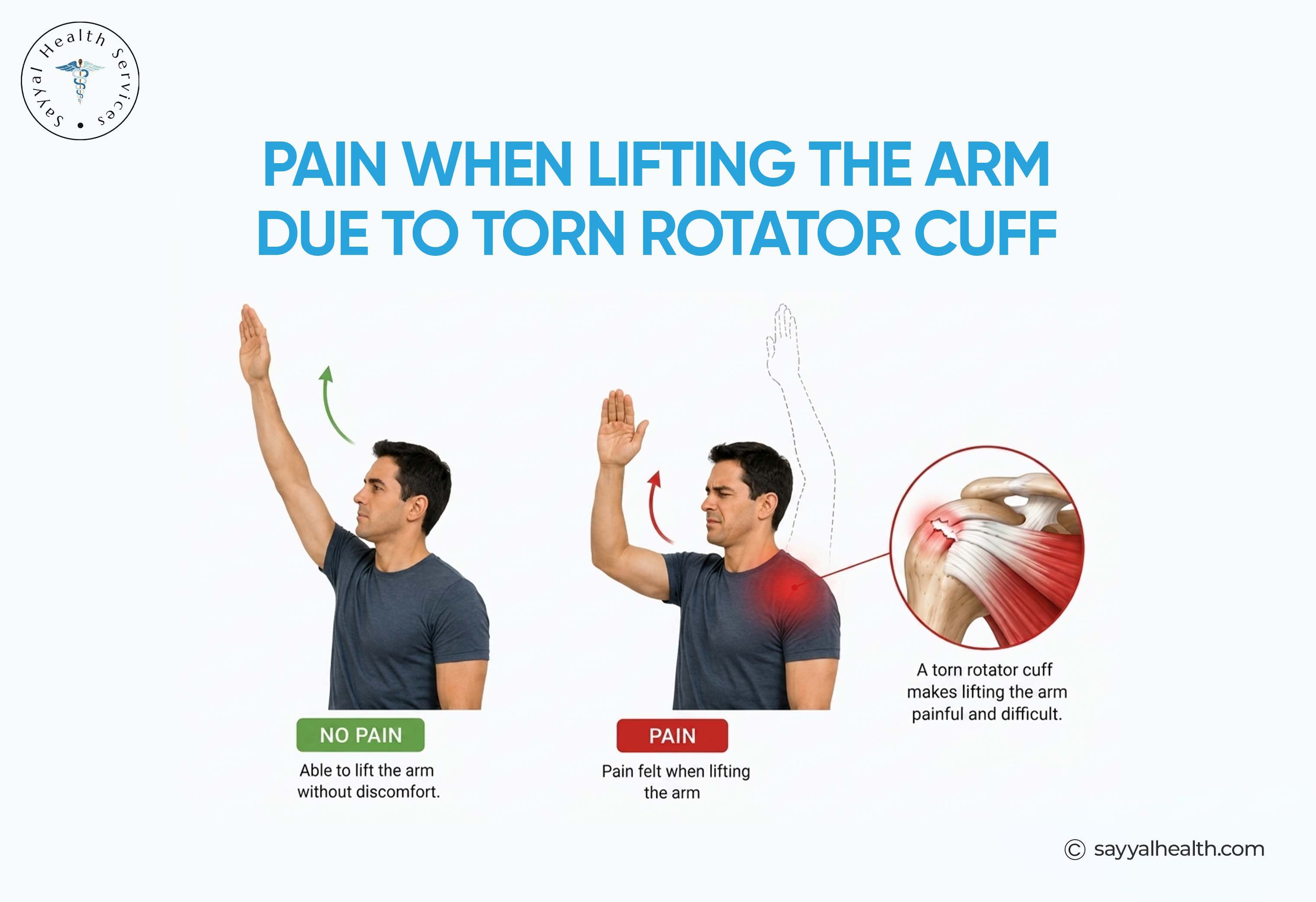
Feeling pain when lifting an arm while doing any kind of work. Lifting the arm out to the side or overhead, brushing hair, putting on a jacket, and reaching into a cabinet frequently triggers pain, particularly in a middle range of motion, sometimes referred to as a "painful arc." Pain that eases once the arm is fully raised, then returns as it comes back down, is a pattern often reported with rotator cuff problems.
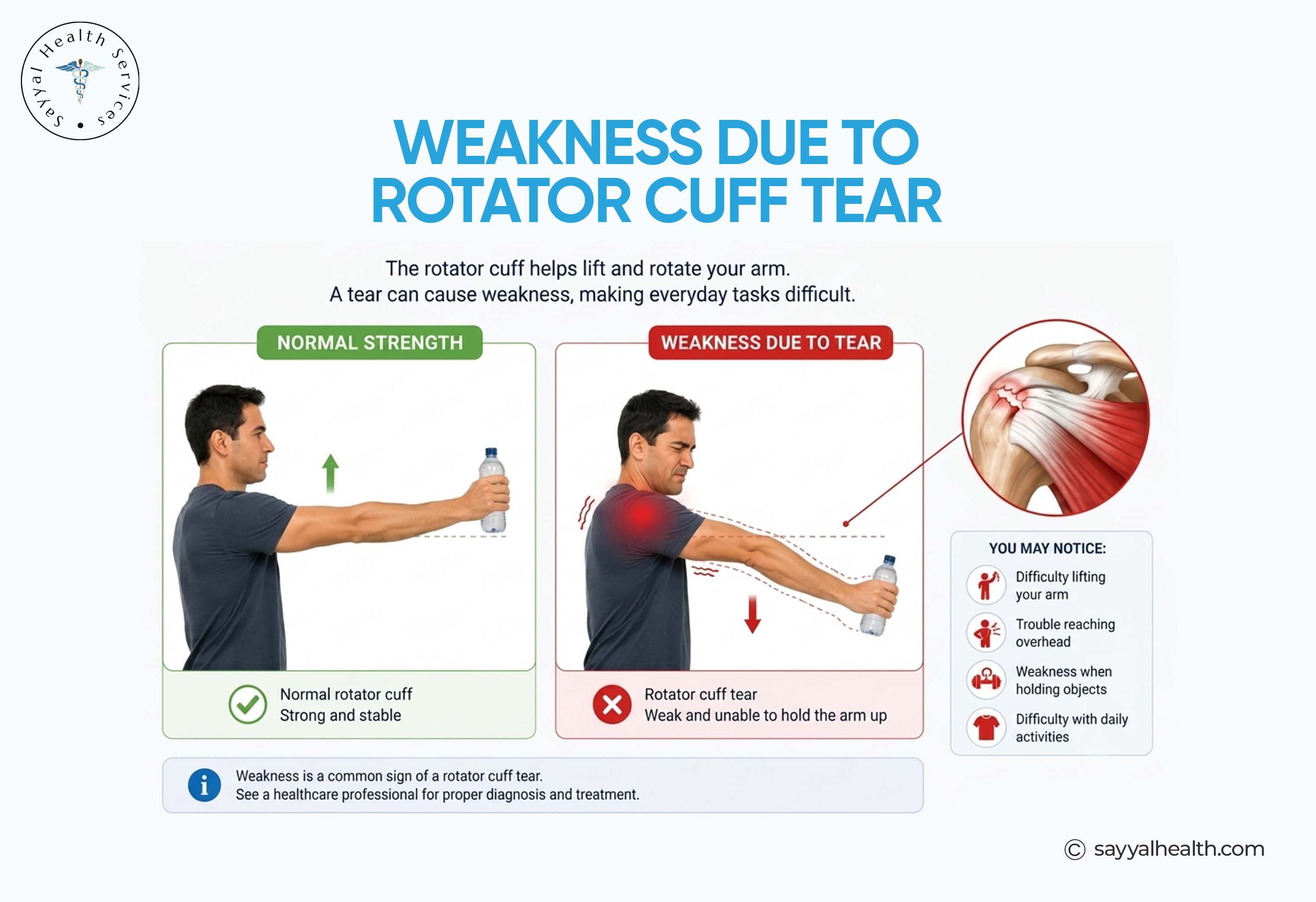
In short: weakness when lifting, rotating, or holding the arm away from the body is one of the more telling signs of a tear, since it points to an actual mechanical problem rather than simple stiffness.
People often describe it as the arm "giving out" during ordinary tasks, struggling to lift a grocery bag, having trouble blow-drying their hair, or being unable to hold an object steady at shoulder height. Weakness that's disproportionate to the pain (meaning the arm feels far weaker than expected given how much it hurts) can suggest a more significant, full-thickness tear.
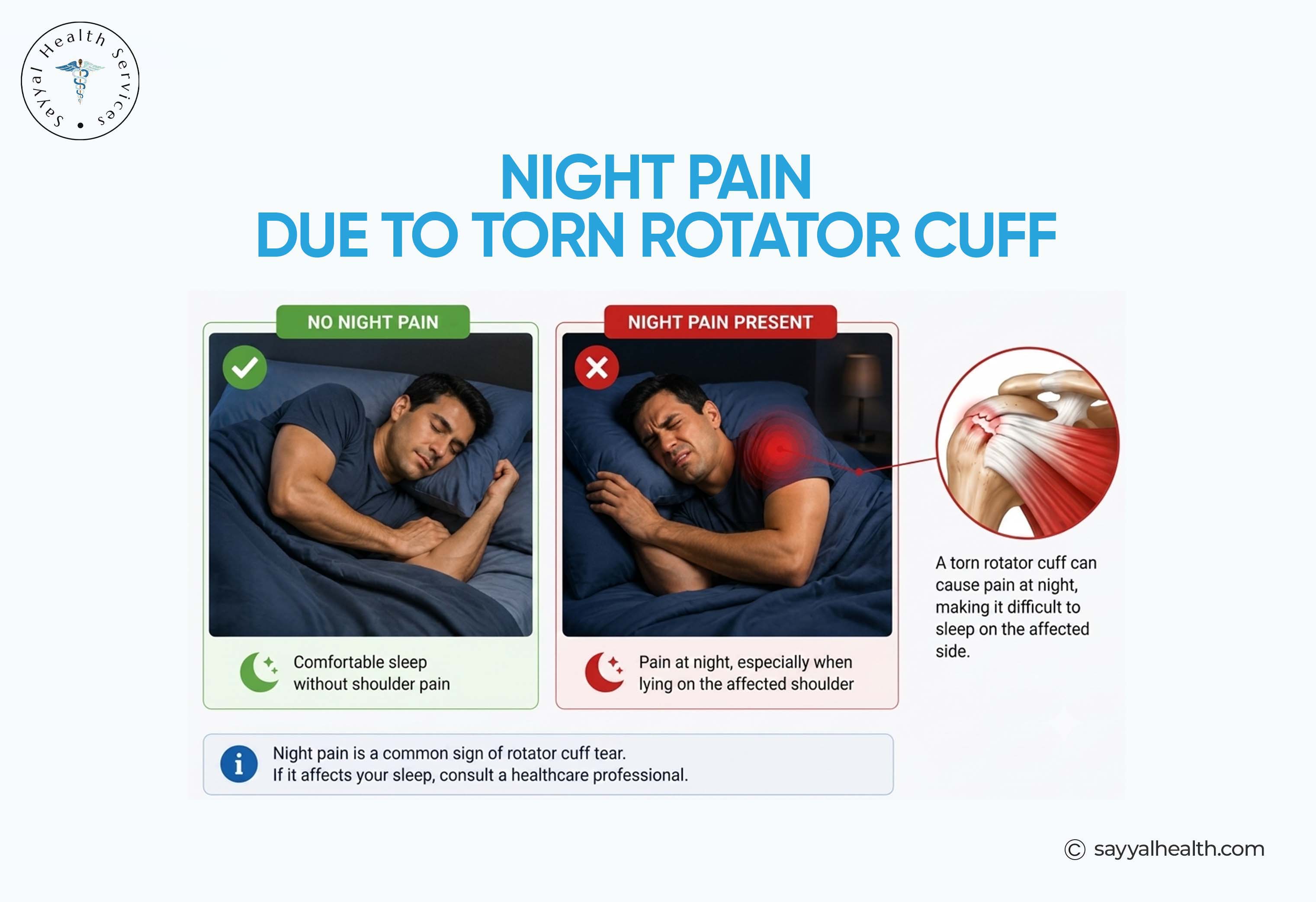
Night pain, especially when lying on the affected shoulder, is one of the most classic and specific symptoms of a rotator cuff tear.
Many people report that pain is tolerable during the day but becomes intense once they lie down, particularly on the injured side. This happens partly because lying down changes pressure on the inflamed tendon and partly because there are fewer distractions at night. It's common for people to shift to sleeping on their back or the opposite side, prop their arm on a pillow, or wake up repeatedly through the night.
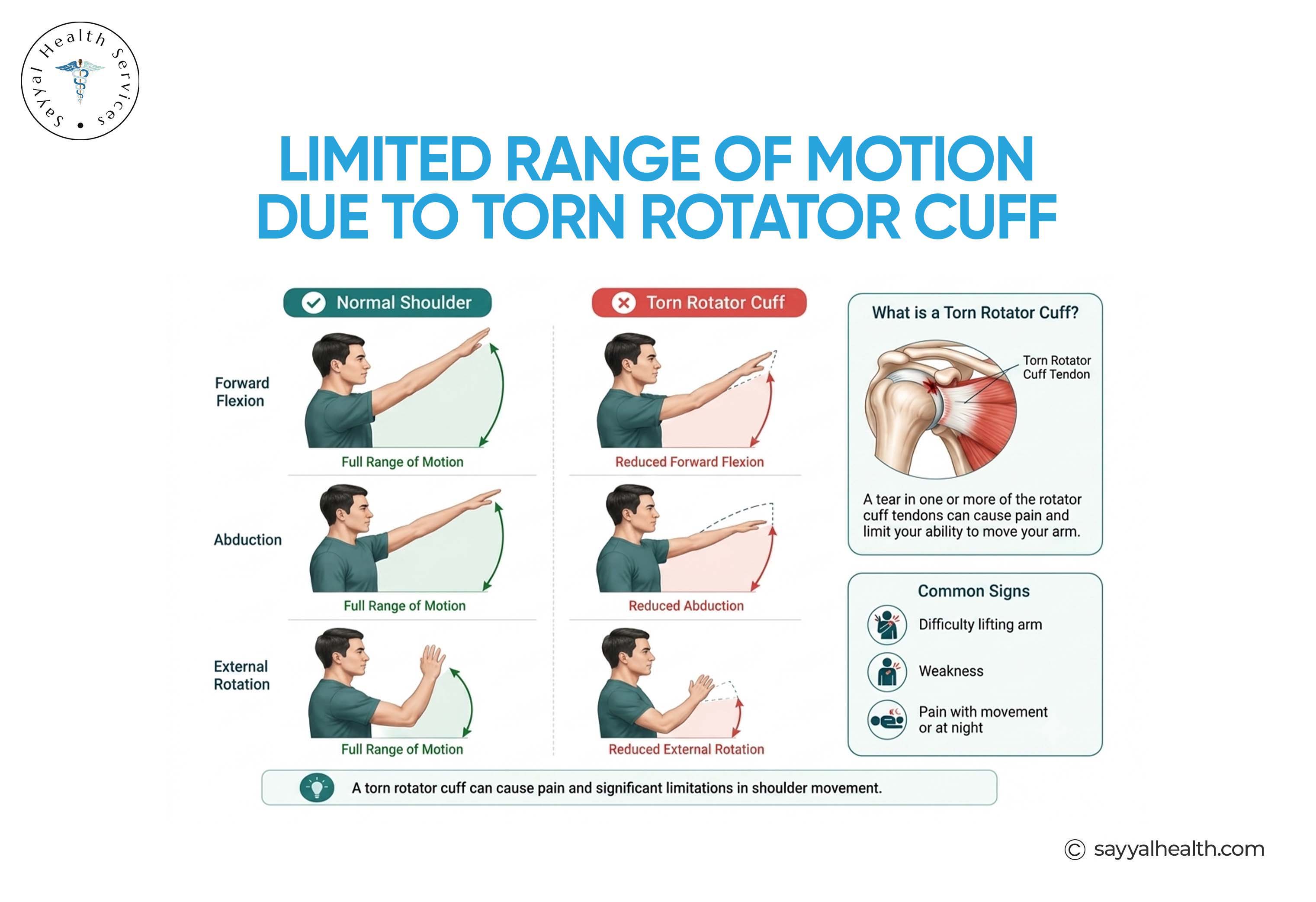
Reduced motion can result either from the tear itself or from the body guarding against pain by tightening surrounding muscles. Reaching overhead, behind the back, or across the body may all feel restricted compared to the unaffected shoulder.
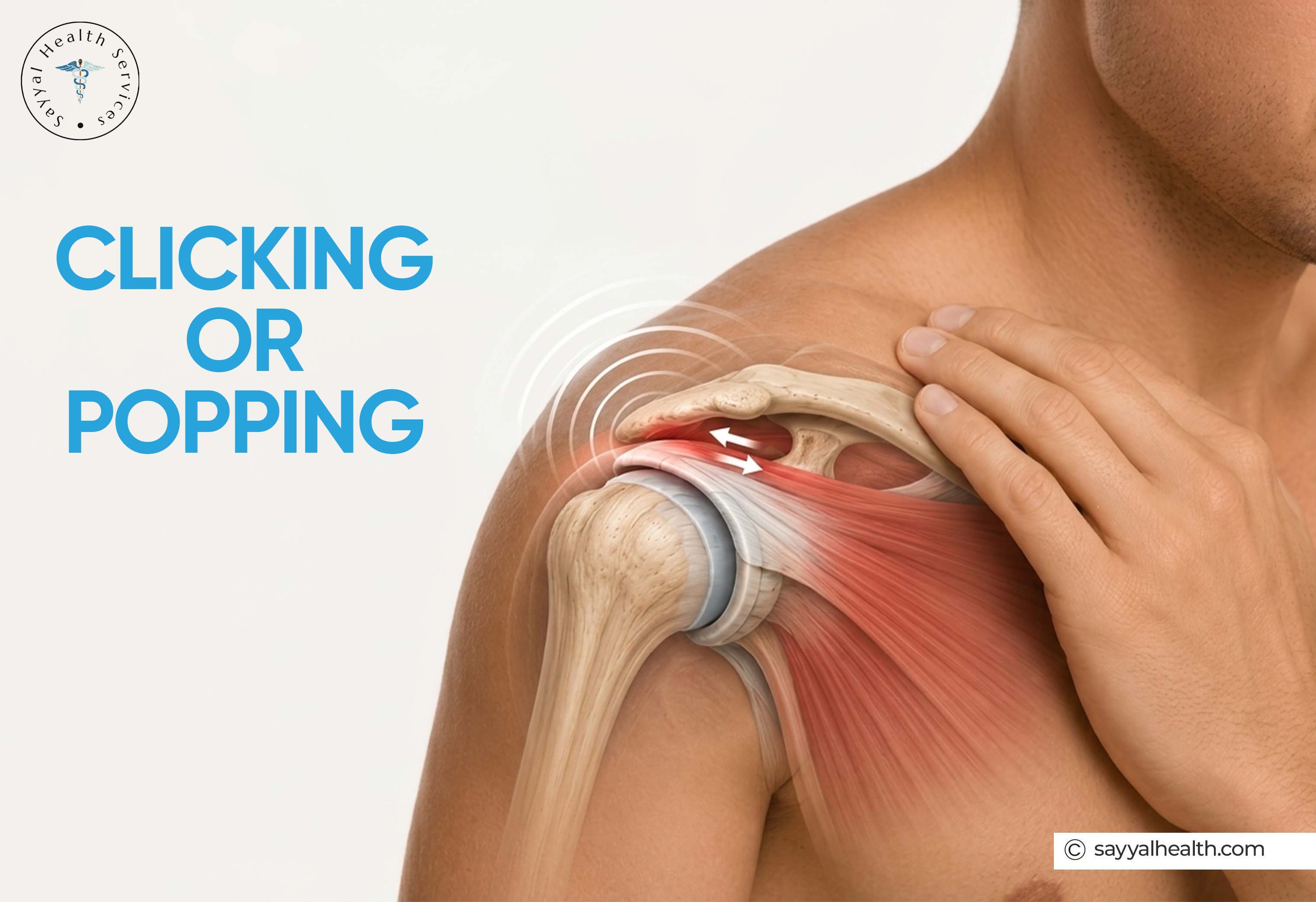
A clicking, popping, or grinding sensation (sometimes called crepitus) can occur when the shoulder moves through certain positions. This isn't unique to rotator cuff tears, but combined with pain and weakness, it adds to the overall picture.
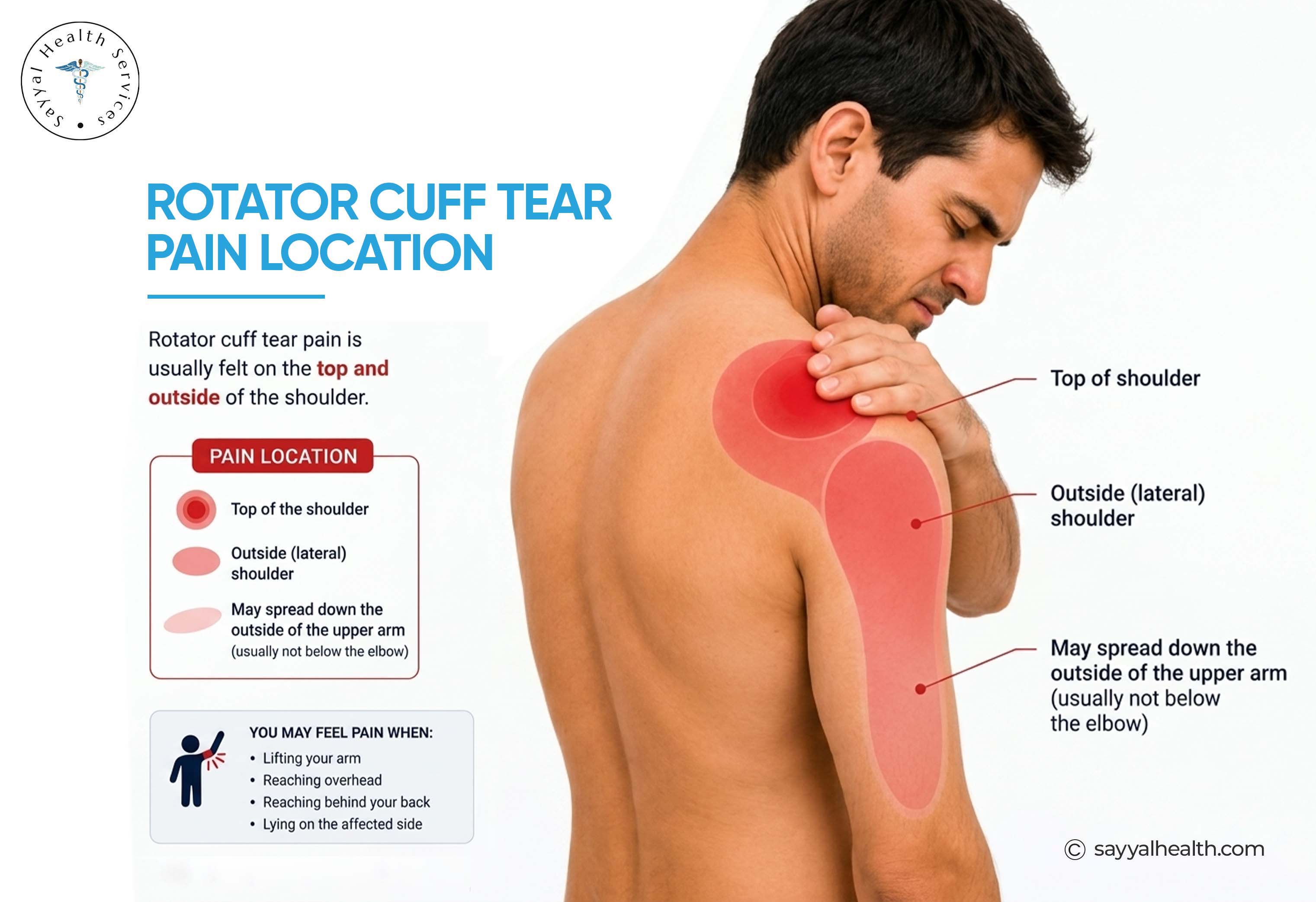
Pain frequently spreads from the shoulder down toward the mid-upper arm, generally stopping above the elbow. In addition, pain that travels further down into the forearm or hand is less typical of a rotator cuff tear and raises the possibility of a nerve-related issue instead.
Everyday actions like putting dishes away, changing a lightbulb, or lifting a suitcase into an overhead bin can become genuinely difficult, not just uncomfortable.
Motions like fastening a bra, tucking in a shirt, or reaching into a back pocket often become painful or limited, especially with tears involving the subscapularis tendon.
Beyond dramatic movements, ordinary activities, such as typing, carrying a bag on that shoulder, and sleeping in a favourite position, can become sources of frustration as symptoms progress.
A tear caused by a specific event, such as a fall onto an outstretched arm, a heavy or awkward lift, or a shoulder dislocation, often causes immediate, sharp pain, a snapping sensation, and sudden weakness. Some people even hear or feel a pop at the moment of injury.
Degenerative tears, more common with age and repetitive overhead activity, tend to build slowly. Someone might notice mild soreness for months that gradually worsens, with weakness creeping in almost unnoticed until certain tasks become genuinely hard.
The earliest signs are usually mild, activity-related shoulder pain and slight weakness that people initially dismiss as normal soreness or aging.
In the early stages, symptoms are often easy to brush off. A dull ache after gardening, mild stiffness in the morning, or occasional discomfort reaching for a seatbelt can all be early clues. Because these signs are subtle, many people don't seek evaluation until pain becomes more frequent or a specific movement clearly triggers it.
In short: most people describe a deep, dull ache in the shoulder that sharpens with certain movements, along with a sense of weakness or instability when lifting the arm.
Rather than a sharp, surface-level pain, a rotator cuff tear tends to feel like it's coming from inside the joint itself. Many describe it as a toothache-like ache that's present most of the time, punctuated by sharp jabs of pain during specific motions reaching overhead, rotating the arm, or lying on that side. Along with the pain, there's often a sense that the shoulder can't be fully trusted to support weight, sometimes described as feeling "loose" or "unstable," even though true instability is less common than pain and weakness.
In short: pain is most commonly felt on the outer side of the upper arm, near the top of the shoulder, and can extend partway down the arm.
The most frequently reported pain location is the lateral (outer) shoulder and upper arm, roughly where a short-sleeve shirt would end. Some people also feel pain at the front of the shoulder or deep within the joint. It's uncommon for a rotator cuff tear alone to cause pain that spreads into the neck or below the elbow. When that happens, it's worth considering other causes as well.
|
Feature |
Partial-Thickness Tear |
Full-Thickness (Complete) Tear |
|
Tendon damage |
The tendon is frayed or partly torn, but still attached |
The tendon is torn all the way through and may fully detach |
|
Pain |
Often present, can range from mild to severe |
Can be severe, though some tears cause less pain than expected |
|
Weakness |
Mild to moderate |
Often more pronounced, especially with large tears |
|
Onset |
Usually gradual (wear-related) |
Can be sudden (injury) or gradual over time |
|
Healing without surgery |
More likely to improve with non-surgical care |
Less likely to heal on its own; may still be managed conservatively depending on the person |
|
Typical treatment |
Physical therapy first, in many cases |
Physical therapy, injections, or surgery, depending on severity, age, and activity level |
This table reflects general patterns; the right treatment always depends on an individual's imaging findings, symptoms, age, and activity goals, as determined by a qualified clinician.
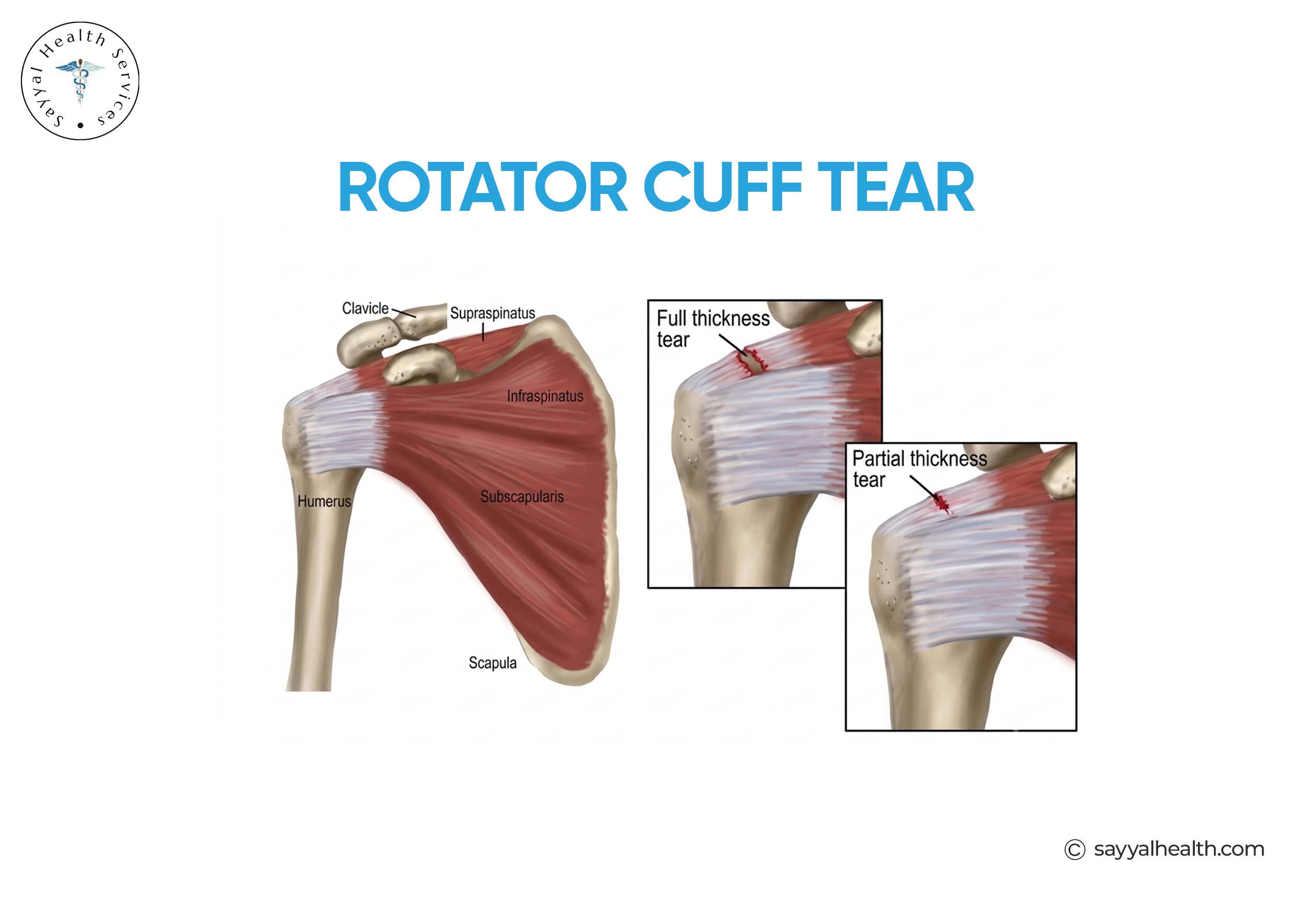
Rotator cuff tears generally fall into two categories:
Many tears are actually a combination of both: a tendon that was already weakened by wear finally tears during a relatively minor movement.
According to major orthopedic and health organisations, factors that increase the risk of a rotator cuff tear include:
In short: a rotator cuff tear can cause some discomfort near the base of the neck from muscle guarding, but true neck pain, especially pain radiating down the arm past the elbow, is more often caused by a separate condition affecting the cervical spine.
It's common for shoulder pain to make surrounding muscles, including those at the top of the shoulder and side of the neck, tighten up protectively, creating a secondary ache. However, if pain, tingling, or numbness travels down the arm into the hand or fingers, that pattern is more typical of a pinched nerve in the neck (cervical radiculopathy) than a rotator cuff tear. Because these two conditions can coexist or mimic each other, a clinician will often examine both the shoulder and the neck before settling on a diagnosis.
In short: it's uncommon, but not impossible, for a rotator cuff to tear during sleep, and it usually happens to a tendon that was already significantly weakened.
A completely healthy tendon is unlikely to tear from a normal sleeping position. That said, some people with pre-existing tendon wear or a partial tear notice a sudden increase in pain after sleeping in an awkward position, which can feel like a new injury. In rare cases, an already fragile tendon can progress to a full tear during ordinary activity, including sleep. If shoulder pain appears suddenly after waking with no clear cause, it's reasonable to have it evaluated, especially if weakness accompanies it.
In short: rotator cuff tendinitis, shoulder impingement, bursitis, frozen shoulder, arthritis, and cervical radiculopathy can all cause shoulder pain that resembles a rotator cuff tear, which is why a professional evaluation matters.
|
Condition |
Key Features |
How It Differs From a Tear |
|
Rotator cuff tendinopathy |
Inflammation of the tendon, pain with overhead movement |
No structural tear; often improves with rest and therapy |
|
Shoulder impingement |
The tendon gets pinched under the acromion during movement |
Causes similar pain patterns, but the tendon may remain intact |
|
Bursitis |
Inflammation of the fluid-filled sac cushioning the joint |
Pain is often more localised and less associated with true weakness |
|
Frozen shoulder (adhesive capsulitis) |
Progressive stiffness and pain, motion loss in all directions |
Motion loss affects passive movement too, not just active lifting |
|
Osteoarthritis |
Joint degeneration, stiffness, grinding |
Pain is more constant, less activity-specific, and visible on X-ray |
|
Cervical radiculopathy |
Pinched nerve in the neck causing arm pain, numbness, and tingling |
Pain often extends below the elbow into the hand/fingers; neck movement can reproduce symptoms |
Diagnosis usually involves a physical exam with strength and range-of-motion testing, followed by imaging such as ultrasound or MRI to confirm a tear and assess its size.
A clinician will check tenderness and range of motion and observe how the shoulder moves during specific tasks.
Special tests, such as resisting the clinician's hand while lifting or rotating the arm, help identify which specific tendon may be affected.
Comparing active motion (the patient moving the arm) with passive motion (the clinician moving the arm) helps distinguish a tear from stiffness-based conditions like frozen shoulder.
In short: many rotator cuff tears, especially partial tears, are first managed with rest, physical therapy, and pain control; surgery is generally reserved for larger tears, significant weakness, or cases that don't improve with conservative care.
Avoiding movements that provoke pain, particularly overhead lifting, gives the tendon a chance to calm down.
A structured physical therapy program for shoulder injuries strengthens surrounding muscles and improves shoulder mechanics and is often the first-line treatment for many tears, especially partial ones.
Over-the-counter anti-inflammatory medication can help manage pain and swelling during recovery, though it doesn't heal the tendon itself.
Corticosteroid injections may reduce inflammation and pain enough to allow more effective physical therapy, though they're generally used sparingly due to potential effects on tendon tissue with repeated use.
Surgical repair may be considered for larger or full-thickness tears, tears in younger or highly active individuals, or cases where non-surgical treatment hasn't improved symptoms after a reasonable trial period. The decision depends on tear size, symptom severity, age, and functional goals, and should be made together with an orthopedic specialist.
In the early, painful phase, it's generally advised to avoid heavy overhead lifting, aggressive stretching into pain, and resistance exercises that reproduce sharp pain. A physical therapist can guide a safe, gradual return to strengthening.
In short: recovery timelines vary widely, from a few weeks for mild tendinitis-like symptoms managed conservatively to 4–6 months or longer after surgical repair.
Recovery pace depends heavily on tear size, age, tissue quality, and how closely rehabilitation guidance is followed.
Seek medical evaluation if you experience:
Prompt evaluation matters because some tears, particularly larger ones, are more successfully treated when addressed earlier rather than after months of compensating with other muscles.
What are the first signs of a torn rotator cuff?
Early signs are often mild activity-related pain and slight weakness, particularly when reaching overhead, that gradually becomes more noticeable. Some people also experience crepitus ( crackling sensation when they move their joints and faint popping), disturbance while sleeping due to night pain.
How painful is a torn rotator cuff?
Pain can range from mild to severe. A rotator cuff tear caused by a sudden injury often causes severe pain, while a tear that develops slowly over time usually causes only mild to moderate discomfort.
Can you still lift your arm with a torn rotator cuff?
Many people can still lift their arms to some degree, though with pain or noticeable weakness. Complete inability to lift the arm suggests a larger tear and warrants prompt evaluation.
What does rotator cuff syndrome mean?
This is a general term sometimes used to describe a spectrum of rotator cuff problems, from tendinitis and impingement to partial or full tears, rather than one specific diagnosis.
Why does my shoulder hurt more at night?
Rotator cuff pain often feels worse at night because lying down puts pressure on the injured tendon. It can also seem more painful because there are fewer distractions when you're trying to rest.
Can a rotator cuff tear heal on its own?
Partial tears sometimes improve with rest and physical therapy. Still, full-thickness tears typically do not heal completely without intervention, since torn tendon tissue generally doesn't reattach to bone on its own.
How do you know if your rotator cuff pain is serious?
Signs suggesting a more significant tear include marked weakness, inability to hold the arm up, pain following a specific injury, and symptoms lasting more than a few weeks despite rest.
Can a torn rotator cuff cause numbness?
Numbness or tingling isn't typical of a rotator cuff tear on its own and more often points to a nerve-related issue, such as a pinched nerve in the neck.
What's the difference between rotator cuff tendinitis and a tear?
Tendinitis involves inflammation without a structural tear, while a tear involves actual damage to the tendon fibres; symptoms can overlap significantly, which is why imaging is often needed to tell them apart.
Is it safe to exercise with a suspected rotator cuff tear?
Light, pain-free movement is usually fine, but heavy lifting or overhead exercise should be avoided until a clinician or physical therapist evaluates the shoulder.
Can stress or poor posture cause rotator cuff symptoms?
Poor posture can contribute to shoulder impingement and muscle imbalances that aggravate rotator cuff symptoms, though it doesn't directly cause a structural tear on its own.
Does a rotator cuff tear show up on an X-ray?
Not directly, X-rays show bone, not tendons, but they can reveal related changes, such as bone spurs, that suggest a chronic rotator cuff problem.
Can young people tear their rotator cuff?
Yes, though it's less common than in older adults. In younger people, tears are more often caused by trauma or repetitive overhead sports rather than age-related wear.
How long can you leave a torn rotator cuff untreated?
There's no universal timeline, but delaying evaluation for a significant tear can sometimes allow it to enlarge or lead to muscle weakening, so it's best not to ignore persistent symptoms.
What's the best sleeping position for a rotator cuff injury?
Many people find relief when sleeping on their back, with the affected arm supported by a pillow to avoid direct pressure on the injured shoulder.
This article, including images (AI-generated), is for general educational purposes and isn't a substitute for personal medical advice. If you're experiencing shoulder symptoms, please consult a qualified healthcare provider for an accurate diagnosis.
Your feedback helps us create better content for everyone.