Contact Person:Dr. Safwan Sayyal
Working Hours:Mon - Fri: 9:00 AM - 5:00 PM
Contact:info@sayyalhealth.com








Published: April 3rd, 2026Last updated: September 23rd, 2026
A general practitioner is a medical doctor who provides primary healthcare to patients of all ages. A GP is usually the first doctor you contact when you have a health concern. They diagnose illnesses, manage ongoing conditions, give health advice, and refer patients to specialists when needed.
A General Practitioner (GP) in Australia provides essential healthcare services including diagnosis, treatment, and preventive care for all age groups. In Australia, GPs are sometimes called "family doctors" because they often care for whole families over many years. They build long-term relationships with patients to provide better and more personal care.
A general practitioner in Australia is not limited to one body system or age group. They treat everything from colds and skin problems to diabetes and mental health conditions.
GPs work in private clinics, community health centres, hospitals, and telehealth platforms. They are the backbone of Australia's primary healthcare system and play a key role in keeping Australians healthy every day.
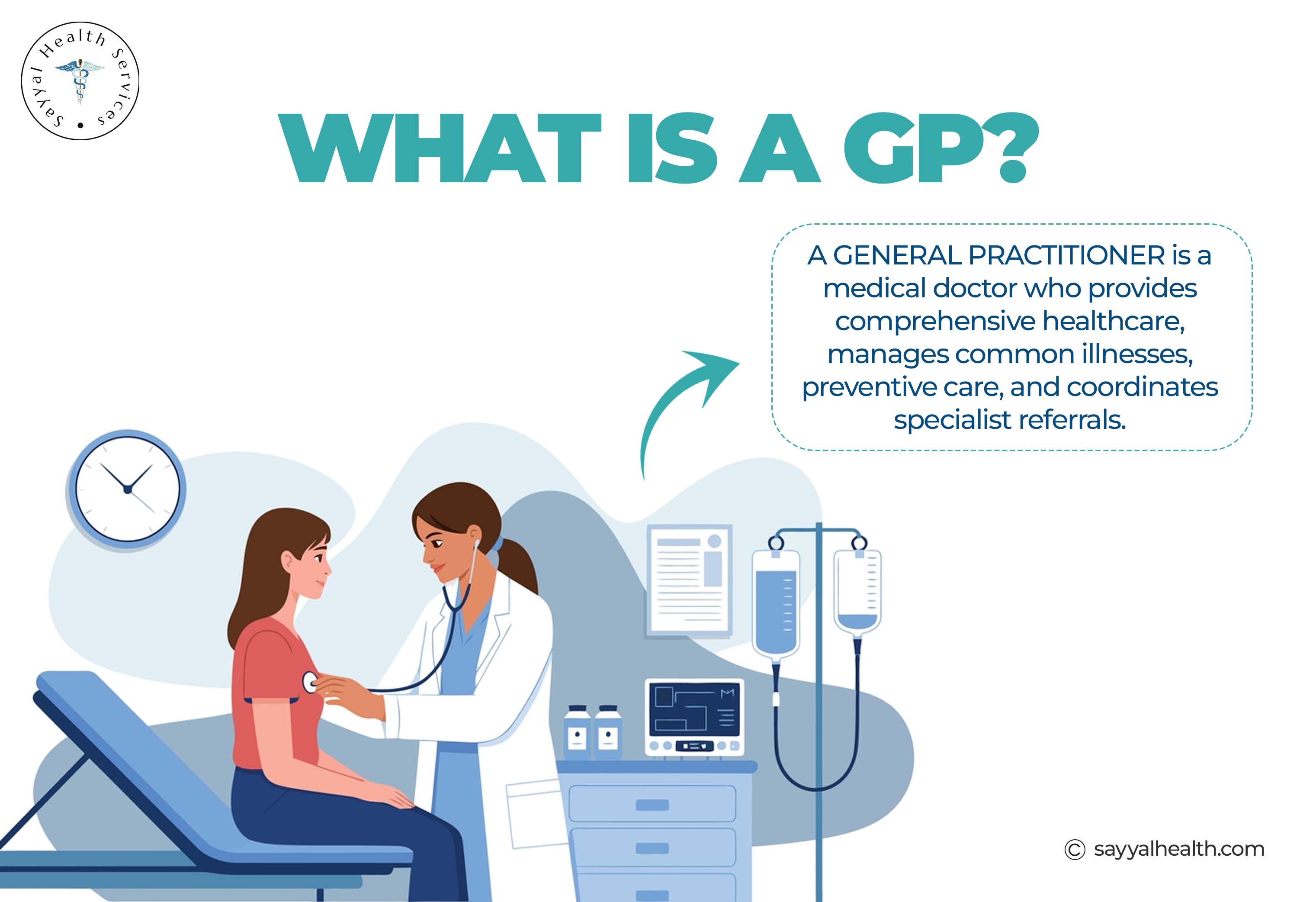
Understanding the roles of a GP helps patients know what to expect when they visit. A GP's role goes far beyond writing prescriptions. Here is what Australian GPs do:
A GP is the first person to contact for most health concerns. Whether it is a sore throat, a rash, or chest pain, your GP assesses your condition and decides the best course of action. They treat acute illnesses, manage minor injuries, and monitor your overall health.
Long-term conditions like diabetes, asthma and heart disease are common in many Australians. GPs are responsible for creating and managing ongoing care plans to help patients control these conditions and prevent complications.
GPs also diagnose and manage mental health conditions such as depression and anxiety. They are the ones who create mental health treatment plans (MHTPs). These plans allow patients to access up to 10 subsidised psychology sessions per year through Medicare.
Prevention is a major part of a GP's role. GPs offer vaccinations and health screenings. They also encourage patients to stay on top of check-ups by giving lifestyle advice before small problems become big ones.
A GP writes the referral when a patient needs specialist care. They also coordinate care between hospitals, specialists, allied health workers, and pharmacists. This coordination helps GPs to make sure the patient receives the required support.
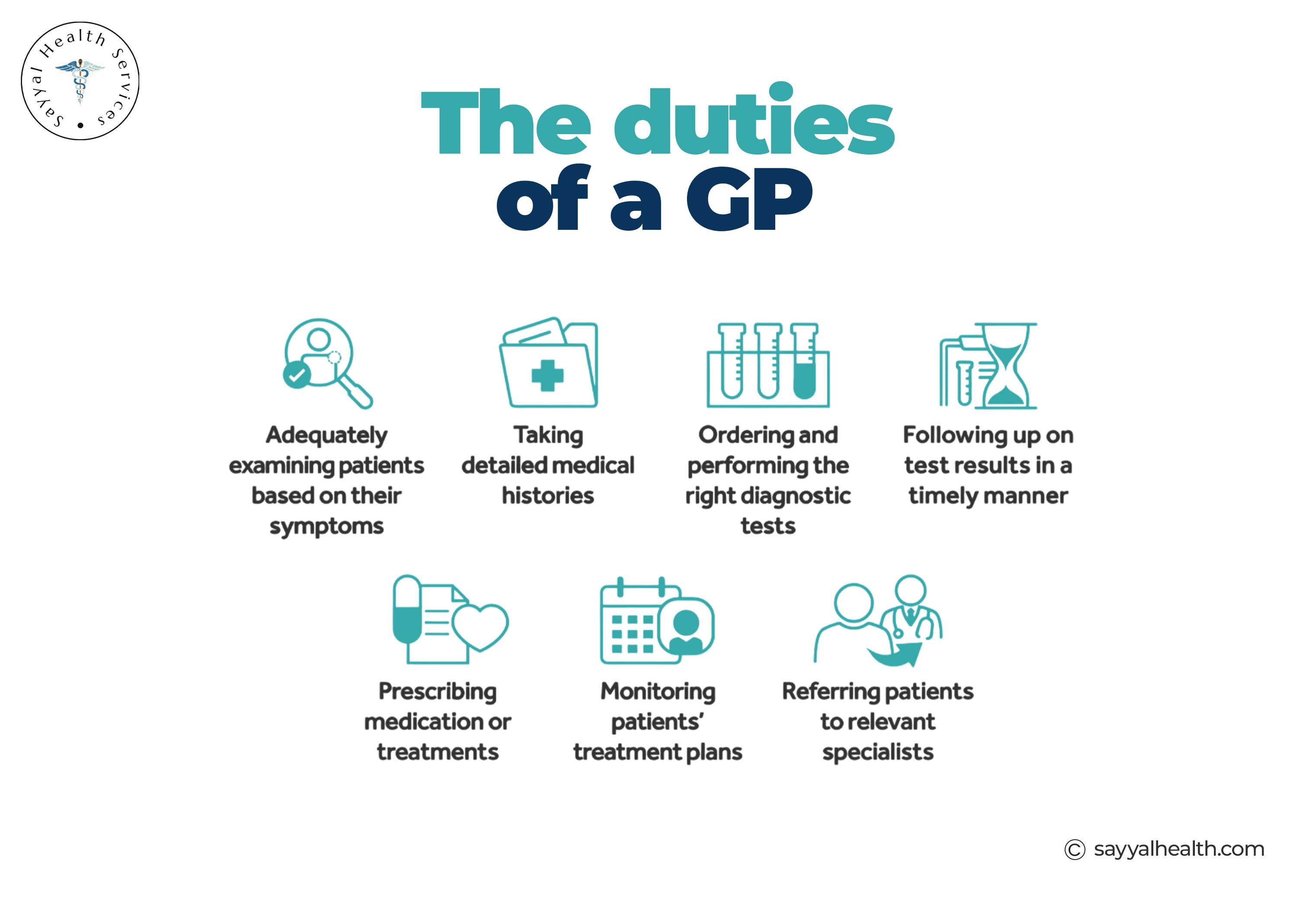
The responsibilities of a GP are broad and demanding. Here is a closer look at what Australian GPs are responsible for on a daily basis:
The clinical responsibilities of a general practitioner include:
An Australian gp is also responsible for preventive responsibilities, which are
Here are the mental health responsibilities of a general practitioner:
The coordination and communication responsibilities are:
Administrative responsibilities of a general practitioner are:
A GP in Australia sees between 30 to 40 patients per day. Managing this workload while maintaining quality care requires strong clinical skills, empathy, and organization.
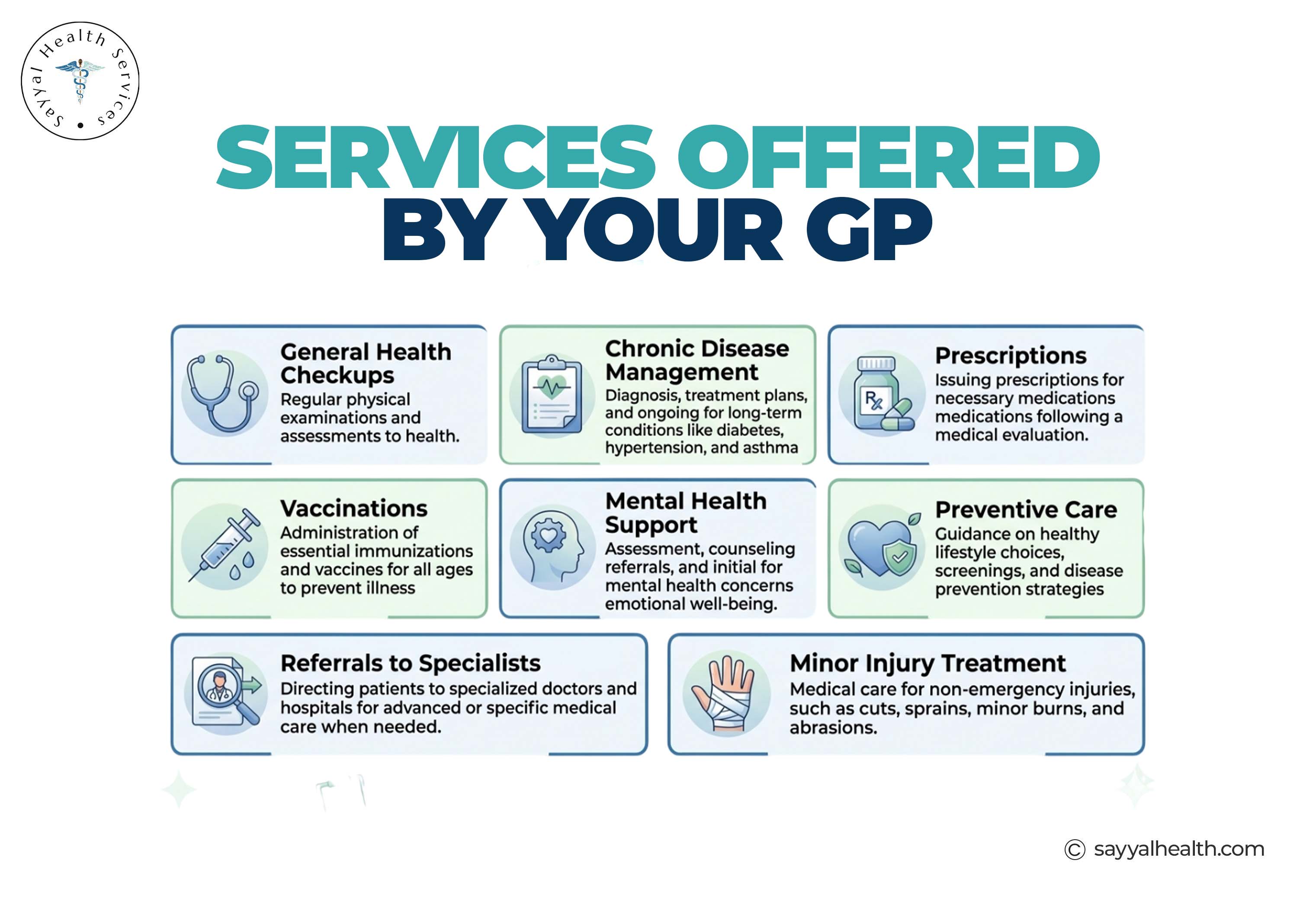
GPs offer a wide range of services that cover almost every aspect of a person's health. Below are the most common GP services available in Australia:
This covers new symptoms, follow-up appointments, and routine health checks. A standard consultation lasts between 10 and 20 minutes. However, longer appointments are available for complex needs.
GPs play an important role in women's health. They provide female patients
Men’s health also comes into the GP’s core responsibilities. They ensure men’s health by providing services that include:
GPs provide primary care to children from birth to adolescence. They carry out the children
GPs can create government-subsidised mental health treatment plans, giving patients access to affordable psychology sessions through Medicare's Better Access programme.
For patients with two or more chronic conditions, GPs can create a Team Care Arrangement (TCA). This allows subsidised access to allied health services such as physiotherapy, dietetics, and podiatry.
Before travelling overseas, patients can visit their GP for destination-specific vaccines, malaria prevention, and health advice.
GPs perform full-body skin examinations to detect early signs of melanoma and other skin cancers. Skin problems are common in Australia due to high UV exposure.
Telehealth has become a mainstream service since 2020. Patients can speak with their GP by phone or video from home. It has made healthcare more accessible for those in rural areas or with mobility issues.
Some GPs offer home visits for elderly or housebound patients. They provide aged care facility support, including medication reviews and palliative care planning.
Regular skin cancer checks by a GP play a crucial role in early detection and prevention of serious conditions like Melanoma, basal cell carcinoma, and squamous cell carcinoma. During a skin examination, GPs carefully assess moles, lesions, and unusual skin changes using clinical expertise and, in some cases, dermatoscopy for better accuracy.
Common signs to watch for include changes in mole size, irregular borders, color variation, itching, or bleeding. Early diagnosis of skin cancer symptoms significantly improves treatment outcomes and reduces complications. GPs also provide guidance on UV protection, sun safety, and skin health, helping patients minimize long-term risks.
For individuals with a history of sun exposure or high-risk skin types, routine skin cancer screening is highly recommended. A qualified GP can identify suspicious lesions early and refer patients for further dermatological evaluation if needed.
PRP (Platelet-Rich Plasma) therapy is an advanced regenerative treatment increasingly offered by GPs for a variety of medical and cosmetic concerns. This procedure involves extracting a small amount of the patient’s blood, processing it to concentrate platelets, and injecting it into targeted areas to promote natural healing and tissue regeneration.
GP-led PRP therapy treatments are commonly used for hair loss (androgenetic alopecia), skin rejuvenation, acne scars, and even joint or soft tissue injuries. The growth factors present in platelet-rich plasma help stimulate collagen production, improve skin texture, and accelerate recovery.
As a minimally invasive and natural treatment, PRP for joint pain and prp for hip arthritis has gained popularity due to its safety and effectiveness. GPs ensure proper patient assessment, sterile techniques, and personalized treatment plans to achieve optimal results.
Understanding the cost of seeing a GP is important for patients. The amount you pay depends on whether your GP bulk bills or charges a gap fee.
A bulk billing GP charges nothing to the patient. Instead, they bill Medicare directly for the full Medicare Benefits Schedule (MBS) fee. The Medicare rebate for a standard GP consultation (Item 23) is currently around $42.85 under 20 minutes. For longer consultations (Item 36), it is around $82.90.
Bulk billing GPs are common across Australia. However, its availability varies by suburb. In areas like outer western Sydney, including Gregory Hills and surrounding growth corridors bulk billing GP clinics are in high demand due to large young family populations.
If a GP charges more than the Medicare rebate, the patient pays the difference, known as a gap payment. For example, if a GP charges $90 for a standard consultation and Medicare rebates $42.85, the patient pays a gap of around $47.15.
A GP in Sydney, particularly in inner-city or private practice settings, may charge between $80 and $120 for a standard consultation, depending on the clinic.
Some GPs do not bulk bill at all and operate on a fully private fee model. These clinics may offer longer appointment times, same-day bookings, and a more personalised experience. Out-of-pocket costs at private practices typically range from $40 to $80 above the Medicare rebate.
Patients with concession cards, pensioners, children under 16, and those experiencing financial hardship may be eligible for fully bulk-billed services at most community health centres and many GP clinics across Australia.
General Practitioners have a wide range of career opportunities beyond traditional clinic-based practice. Many GPs choose to work in hospital settings, urgent care centers, or community health clinics where they can handle more diverse and acute cases. Some also explore opportunities in rural or remote areas, where demand for healthcare professionals is high and often comes with additional incentives.
In addition to clinical roles, GPs can move into specialized areas such as occupational health, academic research, or medical education, where they train future healthcare professionals. With advancements in digital health, many GPs are also working in telemedicine, providing virtual consultations and expanding their reach to patients across different locations.
Furthermore, experienced GPs may pursue administrative or leadership roles within healthcare organizations, or even establish their own private practice. This flexibility makes general practice a dynamic and rewarding career with multiple growth pathways.
A natural question for patients and aspiring doctors alike is, 'How much do GP's earn in Australia? GP salaries vary based on experience, location, billing model, and hours worked.
A GP starting salary in Australia typically ranges from $150,000 to $180,000 per year. New GPs often work as contractors at established clinics, earning a percentage of their Medicare billings.
The average GP salary in Australia sits between $200,000 and $280,000 per year for full-time GPs. Senior GPs, practice owners, or those working in procedural medicine can earn $350,000 to $400,000 or more annually. This makes the general practitioner salary in Australia one of the highest among all professions.
How much do GPs earn in Australia per hour? For salaried GPs, the hourly rate ranges from $90 to $130.
In contrast, contractor GPs, who usually retain 65%–70% of their billings, earn an effective hourly rate of $100 to $180, depending on patient volume.
GP pay in Australia varies by location:
|
Location |
Estimated Annual Earnings |
|
GP in Sydney (metro) |
$200,000 – $300,000 |
|
GP in Gregory Hills (growth suburb) |
$200,000 – $320,000 |
|
GP in rural/remote areas |
$300,000 – $450,000+ |
|
GP starting salary (nationwide) |
$150,000 – $180,000 |
A GP in Gregory Hills, for example, benefits from a rapidly growing residential population with strong demand for local healthcare services. GP wages in growth suburbs like this are competitive because the patient load is high and the number of established GPs is still relatively low.
GP wages Australia overall reflects the years of training, level of responsibility, and critical role GPs play in the community.
Australia relies on GPs to keep its healthcare system running. Without strong primary care, more people would end up in hospital emergency departments for conditions that a GP could have managed earlier and at far less cost.
Australia currently has around 40,000 to 50,000 practising GPs. But the demand continues to grow. With Australia’s ageing population and rising chronic disease, the demand for GPs is growing.
Moreover, new outer-suburban communities, like Gregory Hills, further increase this need.
Therefore, qualified doctors are essential to meet these expanding healthcare demands.
The GP average income in Australia reflects this demand, and government incentives continue to encourage GPs to fill gaps in underserved communities.
A general practitioner in Australia provides an essential service to millions of people every year. From routine check-ups and mental health support to chronic disease management and telehealth appointments, GPs cover almost every aspect of a person's healthcare journey.
Whether you are a patient trying to understand your options or someone considering a career in medicine, knowing the services, costs, and roles of a GP gives you a clearer picture of how primary healthcare works in Australia. With competitive GP salaries, strong job security, and the deep reward of helping communities, general practice remains one of Australia's most vital and respected careers.
This blog is only for informational purposes. Medicare rebate figures are approximate and subject to change. Salary figures are based on industry data and may vary by individual circumstance, clinic type, and location.
Your feedback helps us create better content for everyone.