Contact Person:Dr. Safwan Sayyal
Working Hours:Mon - Fri: 9:00 AM - 5:00 PM
Contact:info@sayyalhealth.com








Published: October 27th, 2026Last updated: October 27th, 2026
Early-stage skin cancer on the leg can be easy to miss, and many skin changes turn out to be harmless.
If you notice a new, changing, persistent, or unusual spot or sore on your leg, see your healthcare professional.

Skin cancer starts when skin cells grow abnormally. It can develop anywhere on the body, including the thigh, calf, shin, behind the knee and the back of the leg.
Early-stage skin cancer on the leg can start with a small spot, a new mole, a sore that does not heal, or a patch of skin that looks different from usual.
It may not always look concerning. However, early-stage skin cancer signs and appearance on the leg vary depending on the type of cancer.
Even a small or harmless-looking spot should not be ignored if it changes over time. If you notice a new or changing spot or a sore that does not heal, have it checked by a healthcare professional.
There are three main types of skin cancer:
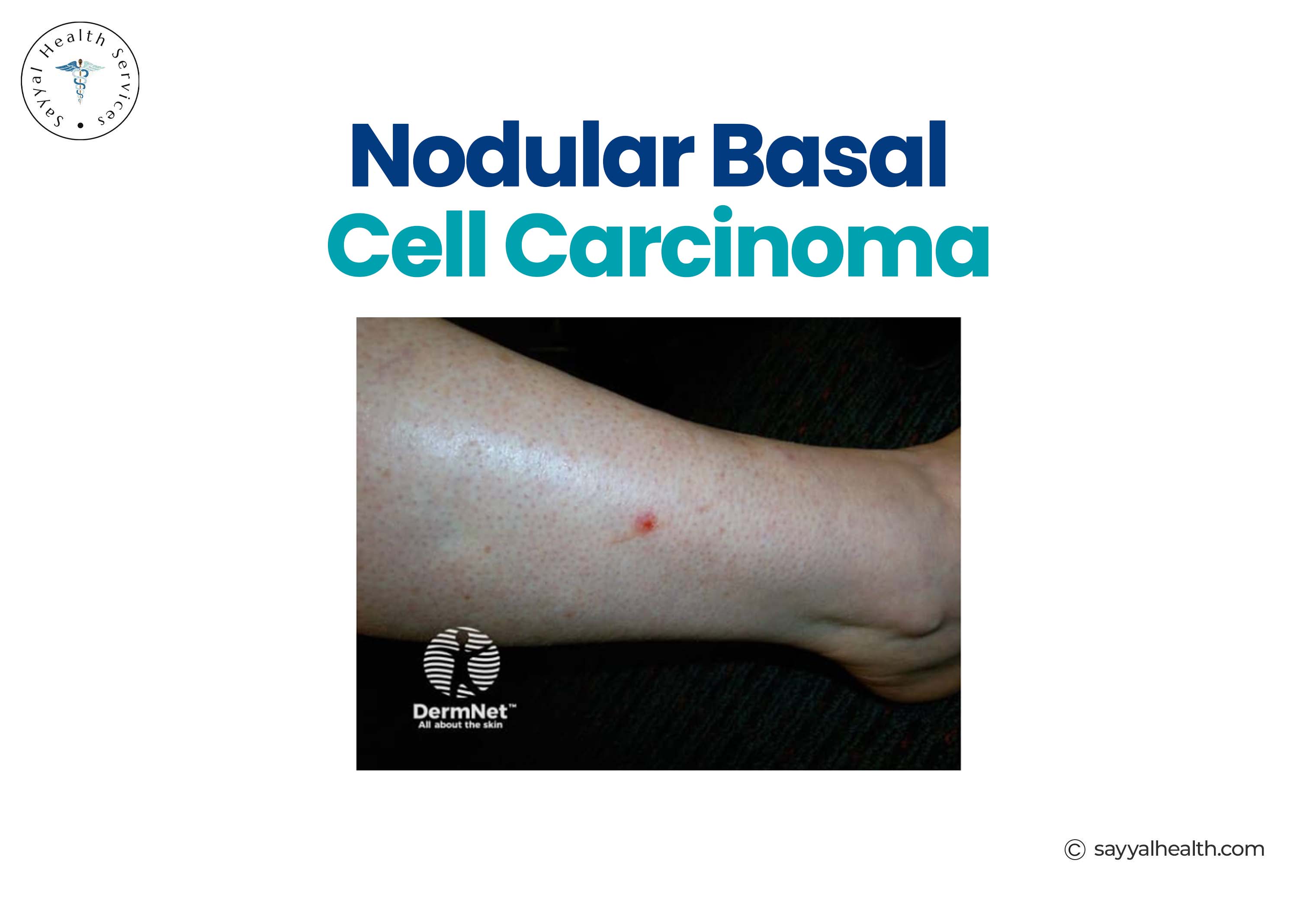
Basal cell carcinoma (BCC) starts in the epidermis (lower layer of the outer skin). This type of skin cancer is very common and mostly develops at a slow pace.
Basal Cell Carcinoma on Leg

Image Source: DermNet
Image of Nodular Basal Cell Carcinoma
Squamous cell carcinoma (SCC) affects the flat cells in the epidermis. It also appears as a scaly or rough growth or an unhealed sore. SCC can grow over weeks or months, or in some cases, its growth varies.
Melanoma is a serious, potentially life-threatening skin cancer that can spread to other body parts. It starts in the cells known as melanocytes that give skin its colour.
Skin cancer indications can be easy to miss. The signs and symptoms of skin cancer on legs are often the same as those anywhere else on the body. Always look out for these symptoms:
A new spot or growth.
A mole that changes colour, size, texture or shape.
A spot with uneven colour or an irregular outline.
A sore that does not heal, or one that heals and keeps coming back.
A rough, dry, scaly or crusted patch that lasts or changes.
A shiny, pearly, pink, red or skin-coloured bump.
A spot that bleeds easily or keeps forming a crust.
A spot or mole that looks different from others.
A spot that becomes itchy or tender.
Remember these two important key points.
First, a spot does not have to be painful, itchy or bleeding to warrant attention. Some skin cancers cause no symptoms.
Second, itching and tenderness can have different causes. These symptoms alone cannot tell you whether a spot is cancerous.
There is not a single look. However, skin cancer on the leg can resemble a changing mole. It can be a persistent sore, a new lump, or a scaly patch. Colour, border, surface texture and change over time are the details a clinician pays attention to.
A few examples of where and how changes may show up:
Thigh or inner thigh: skin cancer on the inner thigh is often missed. Because this area has less exposure to the sun.
Calf or shin: skin cancer on the calf or lower leg may appear as a mole that changes. It can be a red, scaly spot, or a sore that does not settle. Shins and calves are often exposed in summer, and they are also easy to knock or scratch, which can make it harder to notice a spot that isn't healing.
Back of the leg: skin cancer on the back of the leg, including behind the knee, can go unnoticed because it is hard to see. A mirror or a helper can make this easier.
Where a spot appears does not tell you whether it is cancer. Always check the unusual spots as carefully as you check the normal spots.
Many people search for melanoma pictures on legs to compare with their own skin. Photographs can only show examples. For example, uneven colour, a raised lump, or a smudgy edge. They cannot diagnose your spot.
Acral Lentiginous Malignant Melanoma

Image Source: DermNet
Melanoma often appears brown or black, but it may also look red, pink, white, grey or skin-coloured.
A spot can look unlike any photo and still need checking, and a spot that matches a photo may turn out to be harmless.
The table below gives a general overview of the types of skin cancer on legs. These appearances overlap with many harmless conditions, so use it for background only, not to diagnose yourself.
|
Type |
Possible Appearance |
Important Points |
|
Basal Cell Carcinoma (BCC) |
A pearly or shiny bump, a red or pink growth, a dry scaly area, or a sore that does not heal. |
Can be easy to miss and may bleed or crust |
|
Squamous Cell Carcinoma (SCC) |
A scaly thickened red spot, a firm or rough growth, or a persistent sore |
May become tender, crusted or ulcerated, and can grow over weeks or months |
|
Melanoma |
A changing black or brown spot, an irregular mole, or a pink, red or skin-coloured lesion. |
Can develop as a change in an existing mole or as a new mark. |
On the leg, basal cell carcinoma often grows gradually. Squamous cell carcinoma can grow more quickly. And also melanoma may spread to other areas of the body.
According to the Cancer Council notes that some melanomas can become dangerous quickly. Because of this, any new or changing spot is worth getting looked at rather than watched for months.

The ABCDE guide helps people notice some warning signs of melanoma:
A – Asymmetry means that one half looks different from the other.
B – Border means the edges look uneven or unclear.
C – Colour means that the spot has different colours or shades.
D – Diameter means the spot is often larger than 6 mm, but melanoma can be smaller.
E – Evolving spot or mole means changes in size, shape, colour or appearance over time.
Some melanomas do not follow these rules. Nodular melanoma, for example, may be a firm, raised, growing lump that is round and evenly coloured.
Cancer Council describes this with the EFG signs: Elevated, firm and growing. A new or changing spot should be checked
Not necessarily. However, most leg skin changes are harmless, but some need a doctor's attention.
Dry or scaly skin can come from eczema, fungal infections, dry weather, razor irritation or insect bites. Also, brown spots can be freckles, age spots, harmless moles or marks left after an injury.
Dark or brown spots on the legs may sometimes be melanoma. However, not all dark spots are cancerous, and melanoma can appear in different colours.
Dry, flaky patches on the legs can have many causes. If a patch is new, changes over time or does not heal, get it checked by a healthcare professional.
What matters is how a spot behaves. It is important to go to a doctor whenever you find any of these signs:
lasts for weeks without improving,
keeps changing,
looks unusual or different from your other spots,
bleeds easily, or
does not heal.
Never try to diagnose cancer by yourself. Always consult a healthcare professional in this regard.
In Australia, a GP can provide you with an initial assessment. They can examine the spot, discuss your risk, and refer you to a dermatologist or another specialist when needed. Not every spot needs a specialist, and not every skin cancer needs the same tests or treatment. That’s why knowing when to see a dermatologist is easier if your GP has looked at it first.
Arrange a professional assessment if you notice:
An existing or new spot that changes in appearance over time.
A non-healing sore on the leg.
A crusty skin spot that is coming back.
A spot that bleeds repeatedly or changes quickly.
A spot that looks different from other spots.
Any skin change that worries you, even if it is painless or small.
Please do not wait for a spot to become painful or large. If a lesion is changing quickly, bleeding repeatedly, forming an open sore or not healing, have it checked promptly.
A clinical assessment may involve the following:
Questions about when you first noticed the spot, whether it has changed, how much time you spend in the sun, and your family history of skin cancer.
A skin examination.
Dermoscopy, where the clinician looks at the spot through a special magnifying device.
A biopsy, where a small sample or the whole spot is removed and examined under a microscope, if needed to confirm the diagnosis.
Further assessment or referral, depending on the findings.
Not every person will need every step. A photograph, an online search or a phone app cannot reliably confirm or exclude skin cancer.
Look at your legs in good light.
Check the fronts, sides and backs of your legs, including thighs, calves, shins, ankles and feet.
Use a mirror, or ask someone you trust to help with hard-to-see areas such as behind the knees.
Look for changes in the existing mole and new moles.
If it helps, take dated photos to record changes. Do not use them to diagnose a spot.
Get concerning changes checked instead of trying to cut, scrape, burn or treat them yourself.
Your skin checkup depends on your own risk and history. Your GP can advise you on a skin-check plan that suits you.
Sun protection helps lower risk, but it does not remove it, and it does not replace getting a suspicious spot assessed. According to Cancer Council recommendations, use sun protection whenever the UV Index is 3 or above.
Check the UV Index using the free SunSmart app or the Bureau of Meteorology.
Cover up: wear sun-protective clothing, including longer shorts, skirts or pants, and seek shade.
Wear a broad-brimmed hat and sunglasses when outdoors.
Use sunscreen that is broad-spectrum, water-resistant and SPF30 or higher. Cancer Council also recommends SPF50 or higher. Apply it about 20 minutes before heading outside, and use enough: about seven teaspoons for a full body.
Reapply every two hours, and after swimming, sweating or towel drying, whatever the label says.
Avoid solariums and tanning beds.
Talk to your GP about regular skin checks if you have many moles, fair skin, a history of skin cancer or a family history of it.
Can melanoma on the leg appear as a brown spot?
Yes, many do. But melanoma can also be black, pink, red, white, grey or skin-coloured, and most brown spots are harmless. Always consult a clinician to assess it.
Can skin cancer develop on the inner thigh or calf?
Yes. Skin cancer can affect different parts of the leg, including the inner thigh and calf, even in areas that get little direct sunlight.
Can a scaly and dry patch on the leg be a sign of skin cancer?
Sometimes, yes, skin cancer such as BCC and SCC can look like a scaly or dry patch. However, most dry patches are not cancer, but one that persists or changes should be checked.
Can skin cancer on the leg be painless?
Yes. Many skin cancers do not hurt or itch. Pain or itching alone cannot confirm or rule out cancer.
How quickly can skin cancer change?
It varies. Some grow slowly over months or years. Others, such as some SCCs and melanomas, can change over weeks. Because you cannot predict this, new or changing spots are best checked promptly.
Can a photograph tell me whether a spot is skin cancer?
No. Images can help illustrate how skin cancer may look, but they cannot confirm whether a specific spot is cancerous. A healthcare professional may examine the spot and recommend a biopsy if required.
Can a small spot on the leg be melanoma?
Yes. Melanomas can be small, so the 6 mm guide should never be used as a cut-off.
Skin cancer on the leg can look different from case to case.
New, changing, persistent or unusual spots deserve attention.
Colour, size, pain or a photograph alone cannot show whether a spot is cancer.
If needed, a GP can check and assess a concerning spot.
If a skin change worries you, have it assessed rather than waiting.
Disclaimer: This blog is for general information only and should not replace medical advice, examination or diagnosis. We use AI tools to help create some content and images, so errors or inaccuracies may occur. Images are for illustration only and may not show exactly how a skin condition looks in real life. If you notice a skin change that concerns you, speak with your GP or another qualified healthcare professional.
Review dates were not visible in the retrieved text. Check each page and record its date before publication.
Cancer Council Australia, Check for signs of skin cancer: https://www.cancer.org.au/cancer-information/causes-and-prevention/sun-safety/check-for-signs-of-skin-cancer.
DermNet, Lesion, tumour and cancer images: https://dermnetnz.org/image-catalogue/lesion-tumour-and-cancer-images
DermNet, Basal Cell Carcinoma Affecting Arms and Legs https://dermnetnz.org/images/basal-cell-carcinoma-affecting-arms-and-legs
Cancer Council, Signs and symptoms of melanoma: https://cancercouncil.com.au/?p=5106
Cancer Council NSW, How to check for melanoma: https://www.cancercouncil.com.au/news/how-to-check-for-melanoma/
Cancer Council, Can you spot skin cancer poster: https://WWW.cancercouncil.com.au/wp-content/uploads/2020/07/Can-you-spot-skin-cancer-A3-poster.pdf
Cancer Council Australia, Basal and squamous cell carcinoma guide: https://www.cancer.org.au/cancercareguides/basal-and-squamous-cell-carcinoma
Healthdirect, Skin cancer and melanoma: https://www.healthdirect.gov.au/skin-cancer-symptoms
Healthdirect, Basal cell carcinoma: https://healthdirect.gov.au/basal-cell-carcinoma
Cancer Council Australia, Preventing skin cancer: https://cancer.org.au/preventing-cancer/sun-protection/preventing-skin-cancer
Cancer Council Australia, Sunscreen fact sheet: https://www.cancer.org.au/about-us/policy-and-advocacy/prevention/uv-radiation/related-resources/fact-sheet-sunscreen
Cancer Council NSW, Understanding sunscreen labels:
https://www.cancercouncil.com.au/news/3-tips-on-understanding-sunscreen-labels-and-whats-the-best-one/
Your feedback helps us create better content for everyone.